Authors

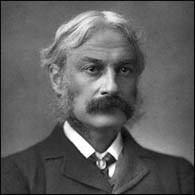
Andrew Gabriel Lang was a prolific Scots man of letters. He was a poet, novelist, and literary critic, and a contributor to anthropology. He now is best known as a collector of folk and fairy tales. The Young Scholar and Journalist Andrew Gabriel Lang grew up in Selkirk in the Scottish Borders, the son of the town clerk and the eldest of eight children. The wild and beautiful landscape of his childhood had a great effect on the young Lang and inspired in him not only a life-long love of the outdoors but a fascination with local folklore and history. The Borders is an area rich in history and he grew up surrounded by tales of Bonnie Prince Charlie and Robert the Bruce. Amongst his many later literary achievements was his Short History of Scotland. A gifted student and avid reader, Lang went to the prestigious St Andrews University (now holding a lecture series in his honour every few years) and then to Balliol College, Oxford. He would later write about the city in Oxford: Brief Historical and Descriptive Notes, published in 1880. Moving to London at the age of 31, already a published poet, he started working as a journalist. His dry sense of humour, writing style and huge array of interests made him a popular editor and columnist and he was soon writing for The Daily Post, Time magazine and Fortnightly Review. It was whilst working in London that he met and married his wife Leonore Blanche Alleyne. The Fairy Books Amongst the most famous of Andrew Lang books are The Rainbow Fairy Books, growing from Lang's interest in myths and folklore which continued to grow as he and Leonore travelled through France and Italy hearing local legends. In the late 19th century, interest in the native fairy tales of Britain had declined and there were very few books recounting them for young readers. In fact fairy tales and magical stories in general were being attacked by some educationalists as being harmful to children. It was to challenge this notion that Lang first began collecting fairy stories for the first of his coloured fairy books, The Blue Fairy Book. Whilst other folklorists collected stories directly from source, Lang set about gathering those stories which had already been recorded. This gave him time to collect a much greater breadth of fairy tales from all over the world, most from well-known writers such as the Brothers Grimm, Madame d'Aulnoy and others from less well known sources. Whilst Lang also worked as the editor for his work and is often credited as its sole creator, the support of his wife, who transcribed and organised the translation of the text, was essential to the work's success. The Blue Fairy Book was published in 1889 to wide acclaim. The beautiful illustrations and magical tales captivated the minds of children and adults alike. The success of the first book allowed Lang and Leonore to carry on their research and in 1890 they published The Red Fairy Book, which drew on even more sources and had a much larger print run. Between 1889 and 1910 they published twelve collections of fairy tales, each with a different coloured binding, with a total of 437 stories collected, edited and translated. The books are credited with reviving interest in folklore, but more importantly for Lang, they revolutionised the Victorian view of fairy tales - inspiring generations of parents to begin reading them to children once more. Last Works At the same time as he was producing the Fairy Books, Lang continued to write a wide assortment of novels, literary criticism, articles and poetry. However, as literary critic Anita Silvey noted, 'The irony of Lang's life and work is that although he wrote for a profession... he is best recognised for the works he did not write.' - the Rainbow Fairy Books. The last Andrew Lang book, Highways and Byways of the Border remained unfinished after his death on 20th July 1912;
A prolific author in various genres under his own name, John Francis Russell Fearn also used these pseudonyms: Astron del Martia, Brian Shaw, Conrad G. Holt, Dennis Clive, Frank Jones, Geoffrey Armstrong, Griff, Hugo Blayn, John Russell, K. Thomas Mark Denholm, Paul Lorraine, Polton Cross, Spike Gordon, Thornton Ayre, Vargo Statten, Volsted Gridban, Dom Passante, John Cotton, Ephriam Winiki, Lawrence F. Rose, Earl Titan, Ephraim Winiki. John Russell Fearn was an extremely prolific and popular British writer, who began in the American pulps, then almost single-handedly drove the post-World War II boom in British publishing with a flood of science fiction, detective stories, westerns, and adventure fiction. He was so popular that one of his pseudonyms became the editor of Vargo Staten’s Science Fiction Magazine in the 1950’s! His work is noted for its vigor and wild imagination. He has always had a substantial cult following and has been popular in translation around the world.
aka Earl Ellison, Rex Marlowe

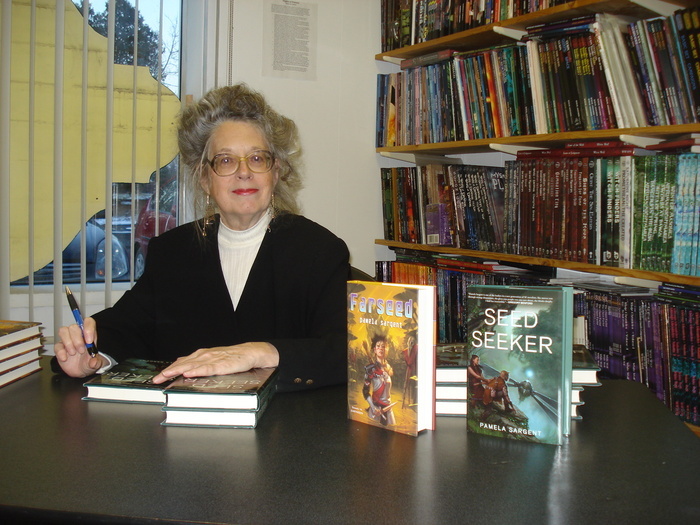
Pamela Sargent has won the Nebula Award, the Locus Award, and has been a finalist for the Hugo Award, the Theodore Sturgeon Memorial Award, and the Sidewise Award for alternate history. In 2012, she was honored with the Pilgrim Award by the Science Fiction Research Association for lifetime achievement in science fiction scholarship. She is the author of the novels Cloned Lives, The Sudden Star, Watchstar, The Golden Space, The Alien Upstairs, Eye of the Comet, Homesmind, Alien Child, The Shore of Women, Venus of Dreams, Venus of Shadows, Child of Venus, Climb the Wind, and Ruler of the Sky. Her most recent short story collection is Thumbprints, published by Golden Gryphon Press, with an introduction by James Morrow. The Washington Post Book World has called her “one of the genre's best writers.” In the 1970s, she edited the Women of Wonder series, the first collections of science fiction by women; her other anthologies include Bio-Futures and, with British writer Ian Watson as co-editor, Afterlives. Two anthologies, Women of Wonder, The Classic Years: Science Fiction by Women from the 1940s to the 1970s and Women of Wonder, The Contemporary Years: Science Fiction by Women from the 1970s to the 1990s, were published by Harcourt Brace in 1995; Publishers Weekly called these two books “essential reading for any serious sf fan.” Her most recent anthology is Conqueror Fantastic, out from DAW Books in 2004. Tor Books reissued her 1983 young adult novel Earthseed, selected as a Best Book for Young Adults by the American Library Association, and a sequel, Farseed, in early 2007. A third volume, Seed Seeker, was published in November of 2010 by Tor. Earthseed has been optioned by Paramount Pictures, with Melissa Rosenberg, scriptwriter for all of the Twilight films, writing the script and producing through her Tall Girls Productions. A collection, Puss in D.C. and Other Stories, is out; her novel Season of the Cats is out in hardcover and will be available in paperback from Wildside Press. The Shore of Women has been optioned for development as a TV series by Super Deluxe Films, part of Turner Broadcasting. Pamela Sargent lives in Albany, New York.