Margins




548 Market St PMB 65688, San Francisco California 94104-5401 USA
© 2026 Paratext Inc. All rights reserved
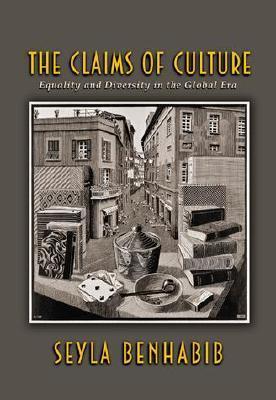
How can liberal democracy best be realized in a world fraught with conflicting new forms of identity politics and intensifying conflicts over culture? This book brings unparalleled clarity to the contemporary debate over this question. Maintaining that cultures are themselves torn by conflicts about their own boundaries, Seyla Benhabib challenges the assumption shared by many theorists and activists that cultures are clearly defined wholes. She argues that much debate—including that of "strong" multiculturalism, which sees cultures as distinct pieces of a mosaic—is dominated by this faulty belief, one with grave consequences for how we think injustices among groups should be redressed and human diversity achieved. Benhabib masterfully presents an alternative approach, developing an understanding of cultures as continually creating, re-creating, and renegotiating the imagined boundaries between "us" and "them." Drawing on contemporary cultural politics from Western Europe, Canada, and the United States, Benhabib develops a double-track model of deliberative democracy that permits maximum cultural contestation within the official public sphere as well as in and through social movements and the institutions of civil society. Agreeing with political liberals that constitutional and legal universalism should be preserved at the level of polity, she nonetheless contends that such a model is necessary to resolve multicultural conflicts. Analyzing in detail the transformation of citizenship practices in European Union countries, Benhabib concludes that flexible citizenship, certain kinds of legal pluralism and models of institutional powersharing are quite compatible with deliberative democracy, as long as they are in accord with egalitarian reciprocity, voluntary self-ascription, and freedom of exit and association. The Claims of Culture offers invaluable insight to all those, whether students or scholars, lawyers or policymakers, who strive to bridge the gap between the theory and practice of cultural politics in the twenty-first century.