Margins




548 Market St PMB 65688, San Francisco California 94104-5401 USA
© 2026 Paratext Inc. All rights reserved
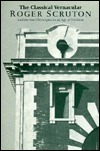
Roger Scruton in his challenging essays on architecture anatomises the spatial imagination of the age by analysis and comparison. The essays, from the perspective of 'the classical vernacular', explore the nature and meaning of architecture, defending architecture without architects, and the 'vernacular tradition', that 'vulgar tongue' which is the natural language of space, proportion and light. He provides a comprehensive critique of modernism (not only the heartless modernism of architecture) from a serious intellectual perspective, based on a philosophical aesthetics which he has propounded in earlier books including The Politics of Culture (1981), The Aesthetic Understanding (1983) and The Philosopher on Dover Beach (1990). Scruton, Anthony Quinton declared, 'writes with great force and freshness. He is humblingly intelligent. Above all, he is consistently interesting.' In these essays written over the last decade and a half, he proves Quinton right time after time. He looks at and through the work of nineteenth- and twentieth-century architects and appraises not only their achievement but the values that inform or distort their work in relation to those of us who live in or beside their structures.