Margins
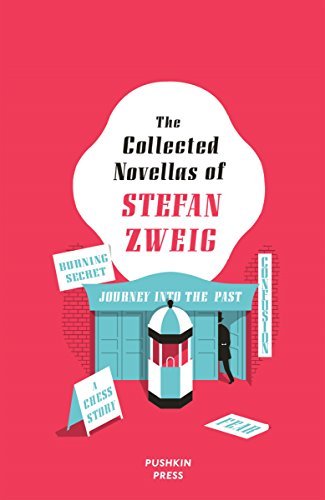
The Collected Novellas of Stefan Zweig book cover
The Collected Novellas of Stefan Zweig
Burning Secret, A Chess Story, Fear, Confusion, Journey into the Past
2015
First Published
4.33
Average Rating
378
Number of Pages
A casual introduction, a challenge to a simple game of chess, a lovers' reunion, a meaningless infidelity: from such small seeds Zweig brings forth five startlingly tense tales-meditations on the fragility of love, the limits of obsession, the combustibility of secrets and betrayal.To read anything by Zweig is to risk addiction; in this collection the power of his writing-which, with its unabashed intensity and narrative drive, made him one of the bestselling and most acclaimed authors in the world-is clear and irresistible. Each of these stories is a bolt of experience, unforgettable and unique. Stefan Zweig was born in 1881 in Vienna, into a wealthy Austrian-Jewish family. He studied in Berlin and Vienna and was first known as a poet and translator, then as a biographer. Between the wars, Zweig was an international bestseller with a string of hugely popular novellas includingLetter from an Unknown Woman,Amok andFear . In 1934, with the rise of Nazism, he left Austria, and lived in London, Bath and New York - a period during which he produced his most celebrated works: his only novel,Beware of Pity, and his memoir,The World of Yesterday . He eventually settled in Brazil, where in 1942 he and his wife were found dead in an apparent double suicide. Much of his work is available from Pushkin Press.

Avg Rating
4.33
Number of Ratings
731
5 STARS
48%
4 STARS
40%
3 STARS
9%
2 STARS
2%
1 STARS
1%
goodreads

Author

Stefan Zweig
Stefan Zweig
Author · 239 books

Stefan Zweig was one of the world's most famous writers during the 1920s and 1930s, especially in the U.S., South America, and Europe. He produced novels, plays, biographies, and journalist pieces. Among his most famous works are Beware of Pity, Letter from an Unknown Woman, and Mary, Queen of Scotland and the Isles. He and his second wife committed suicide in 1942. Zweig studied in Austria, France, and Germany before settling in Salzburg in 1913. In 1934, driven into exile by the Nazis, he emigrated to England and then, in 1940, to Brazil by way of New York. Finding only growing loneliness and disillusionment in their new surroundings, he and his second wife committed suicide. Zweig's interest in psychology and the teachings of Sigmund Freud led to his most characteristic work, the subtle portrayal of character. Zweig's essays include studies of Honoré de Balzac, Charles Dickens, and Fyodor Dostoevsky (Drei Meister, 1920; Three Masters) and of Friedrich Hölderlin, Heinrich von Kleist, and Friedrich Nietzsche (Der Kampf mit dem Dämon, 1925; Master Builders). He achieved popularity with Sternstunden der Menschheit (1928; The Tide of Fortune), five historical portraits in miniature. He wrote full-scale, intuitive rather than objective, biographies of the French statesman Joseph Fouché (1929), Mary Stuart (1935), and others. His stories include those in Verwirrung der Gefühle (1925; Conflicts). He also wrote a psychological novel, Ungeduld des Herzens (1938; Beware of Pity), and translated works of Charles Baudelaire, Paul Verlaine, and Emile Verhaeren. Most recently, his works provided the inspiration for 2014 film The Grand Budapest Hotel.

548 Market St PMB 65688, San Francisco California 94104-5401 USA
© 2026 Paratext Inc. All rights reserved