Margins
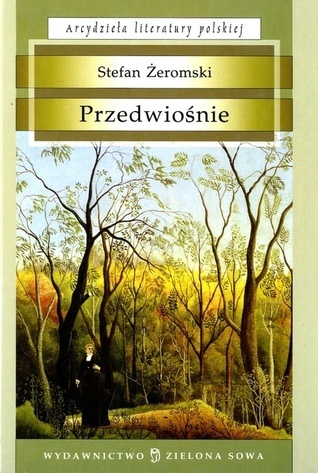
The Coming Spring book cover
The Coming Spring
1924
First Published
3.12
Average Rating
316
Number of Pages
The Coming Spring (Przedwiosnie), Zeromski's last novel, tells the story of Cezary Baryka, a young Pole who finds himself in Baku, Azerbaijan, then a predominantly Armenian city, as the Russian Revolution breaks out. He becomes embroiled in the chaos caused by the revolution, and barely escapes with his life. Then, he and his father set off on a horrendous journey west to reach Poland. His father dies en route, but Cezary makes it to the newly independent Poland. Cezary sees the suffering of the poor, yet his experiences in the newly formed Soviet Union make him suspicious of socialist and communist solutions. He is an outsider among both the gentry and the working classes, and he cannot find where he belongs. Furthermore, he has unsuccessful and tragic love relations. The novel ends when, despite his profound misgivings, he takes up political action on behalf of the poor. Zeromski, whose vivid, assured style is instantly recognizable, was a writer with a strong social conscience, taking up the concerns of the poor and downtrodden.

Avg Rating
3.12
Number of Ratings
15,221
5 STARS
8%
4 STARS
27%
3 STARS
40%
2 STARS
18%
1 STARS
7%
goodreads

Author

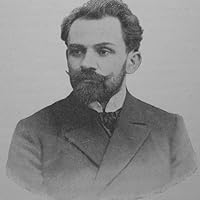
Stefan Zeromski
Stefan Zeromski
Author · 12 books

Stefan Żeromski ( [ˈstɛfan ʐɛˈrɔmski] Strawczyn near Kielce, October 14, 1864 – November 20, 1925, Warsaw) was a Polish novelist and dramatist. He was called the "conscience of Polish literature". He also wrote under the pen names: Maurycy Zych, Józef Katerla and Stefan Iksmoreż. In 1892–96 Żeromski worked as a librarian—during the last two years, as the librarian—at the Polish National Museum in Rapperswil, Switzerland. In recognition of his literary achievements, he was granted the privilege of using an apartment at the Royal Castle in Warsaw. In 1924 he was shortlisted for the Nobel Prize in literature.[2] His novel were filmed by Walerian Borowczyk - Dzieje grzechu (A Story of Sin), Andrzej Wajda - Popioły (The Ashes), Filip Bajon - Przedwiośnie (The Spring to Come). * The Spring to Come (Przedwiośnie) * The Labors of Sisyphus (Syzyfowe prace), about 19th- and 20th-century Tsarist efforts to Russify the Russian-occupied part of Poland. * Ashes (Popioły, 1902 – 03) * The Faithful River (Wierna rzeka, 1912) * Ravens and Crows Will Peck Us to Pieces (Rozdziobią nas kruki, wrony) * Homeless People (Ludzie bezdomni, 1899) * A Story of Sin (Dzieje grzechu) * Elegy for a Hetman (Duma o hetmanie) * Sułkowski * The Rose (Róża) * The Charm of Life (Uroda życia) * Struggles with Satan (Walka z szatanem) * Wind from the Sea (Wiatr od morza) * The Little Quail Ran Away From Me (Uciekła mi przepióreczka) His works have been translated into several languages. For example, they have been translated into Croatian by a member of the Croatian Academy, Stjepan Musulin.

548 Market St PMB 65688, San Francisco California 94104-5401 USA
© 2026 Paratext Inc. All rights reserved