Part of Series

This work has been selected by scholars as being culturally important, and is part of the knowledge base of civilization as we know it. This work was reproduced from the original artifact, and remains as true to the original work as possible. Therefore, you will see the original copyright references, library stamps (as most of these works have been housed in our most important libraries around the world), and other notations in the work. This work is in the public domain in the United States of America, and possibly other nations. Within the United States, you may freely copy and distribute this work, as no entity (individual or corporate) has a copyright on the body of the work. As a reproduction of a historical artifact, this work may contain missing or blurred pages, poor pictures, errant marks, etc. Scholars believe, and we concur, that this work is important enough to be preserved, reproduced, and made generally available to the public. We appreciate your support of the preservation process, and thank you for being an important part of keeping this knowledge alive and relevant.
Authors
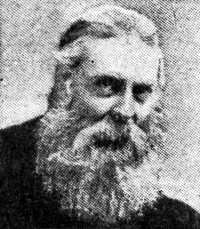
Walter William Skeat, English philologist, educated at King's College School (Wimbledon), Highgate School, and Christ's College, Cambridge, of which he became a fellow in July 1860. The noted palaeographer T. C. Skeat was his grandson. In 1878 he was elected Elrington and Bosworth Professor of Anglo-Saxon at Cambridge. He completed Mitchell Kemble's edition of the Anglo-Saxon Gospels, and did much other work both in Anglo-Saxon and in Gothic, but is perhaps most generally known for his labours in Middle English, and for his standard editions of Chaucer and Langland's Piers Plowman. As he himself generously declared, he was at first mainly guided in the study of Chaucer by Henry Bradshaw, with whom he was to have participated in the edition of Chaucer planned in 1870 by the University of Oxford, having declined in Bradshaw's favour an offer of the editorship made to himself. Bradshaw's perseverance was not equal to his genius, and the scheme came to nothing for the time, but was eventually resumed and carried into effect by Skeat in an edition of six volumes (1894), a supplementary volume of Chaucerian Pieces being published in 1897. He also issued an edition of Chaucer in one volume for general readers, and a separate edition of his Treatise on the Astrolabe, with a learned commentary. His edition of Piers Plowman in three parallel texts was published in 1886; and, besides the Treatise on the Astrolabe, he edited numerous books for the Early English Text Society, including the Bruce of John Barbour, Pierce the Ploughman's Crede, the romances of Havelok the Dane and William of Palerne, and Ælfric's Lives of the Saints (4 vols.). For the Scottish Text Society he edited The Kingis Quair, usually ascribed to James I of Scotland, and he published an edition (2 vols., 1871) of Chatterton, with an investigation of the sources of the obsolete words employed by him. He is buried at the Parish of the Ascension Burial Ground in Cambridge.