Authors


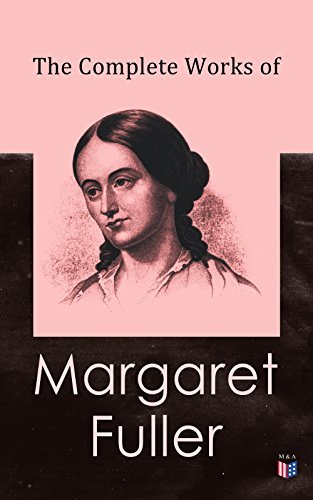
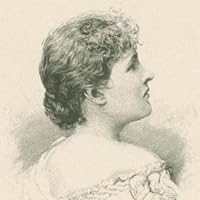
Sarah Margaret Fuller Ossoli, more commonly known as Margaret Fuller, (May 23, 1810 – July 19, 1850) was a journalist, critic and women's rights activist associated with the American transcendental movement. She was the first full-time female book reviewer in journalism. Her book Woman in the Nineteenth Century is considered the first major feminist work in the United States. Born Sarah Margaret Fuller in an area of Cambridge, Massachusetts, she was given a substantial early education by her father, Timothy Fuller. She later had more formal schooling and became a teacher before, in 1839, she began overseeing what she called "conversations": discussions among women meant to compensate for their lack of access to higher education. She became the first editor of the transcendental publication The Dial in 1840 before joining the staff of the New York Tribune under Horace Greeley in 1844. By the time she was in her 30s, Fuller had earned a reputation as the best-read person in New England, male or female, and became the first woman allowed to use the library at Harvard College. Her seminal work, Woman in the Nineteenth Century, was published in 1845. A year later, she was sent to Europe for the Tribune as its first female correspondent. She soon became involved with the revolution in Italy and allied herself with Giuseppe Mazzini. She also met Giovanni Ossoli, with whom she had a child. All three members of the family died in a shipwreck off Fire Island, New York, traveling back to the United States in 1850. Fuller's body was never recovered. Fuller was an advocate of women's rights and, in particular, women's education and the right to employment. She also encouraged many other reforms in society, including prison reform and the emancipation of slaves in the United States. Many other advocates for women's rights and feminism, including Susan B. Anthony, cite Fuller as a source of inspiration. Many of her contemporaries, however, were not supportive, including her former friend Harriet Martineau, who said that Fuller was a talker rather than an activist. Shortly after Fuller's death her importance faded; the editors who prepared her letters to be published, believing her fame would be short-lived, were not concerned about accuracy and censored or altered much of her words before publication.

Ralph Waldo Emerson was born in Boston in 1803. Educated at Harvard and the Cambridge Divinity School, he became a Unitarian minister in 1826 at the Second Church Unitarian. The congregation, with Christian overtones, issued communion, something Emerson refused to do. "Really, it is beyond my comprehension," Emerson once said, when asked by a seminary professor whether he believed in God. (Quoted in 2,000 Years of Freethought edited by Jim Haught.) By 1832, after the untimely death of his first wife, Emerson cut loose from Unitarianism. During a year-long trip to Europe, Emerson became acquainted with such intelligentsia as British writer Thomas Carlyle, and poets Wordsworth and Coleridge. He returned to the United States in 1833, to a life as poet, writer and lecturer. Emerson inspired Transcendentalism, although never adopting the label himself. He rejected traditional ideas of deity in favor of an "Over-Soul" or "Form of Good," ideas which were considered highly heretical. His books include Nature (1836), The American Scholar (1837), Divinity School Address (1838), Essays, 2 vol. (1841, 1844), Nature, Addresses and Lectures (1849), and three volumes of poetry. Margaret Fuller became one of his "disciples," as did Henry David Thoreau. The best of Emerson's rather wordy writing survives as epigrams, such as the famous: "A foolish consistency is the hobgoblin of little minds, adored by little statesmen and philosophers and divines." Other one- (and two-) liners include: "As men's prayers are a disease of the will, so are their creeds a disease of the intellect" (Self-Reliance, 1841). "The most tedious of all discourses are on the subject of the Supreme Being" (Journal, 1836). "The word miracle, as pronounced by Christian churches, gives a false impression; it is a monster. It is not one with the blowing clover and the falling rain" (Address to Harvard Divinity College, July 15, 1838). He demolished the right wing hypocrites of his era in his essay "Worship": ". . . the louder he talked of his honor, the faster we counted our spoons" (Conduct of Life, 1860). "I hate this shallow Americanism which hopes to get rich by credit, to get knowledge by raps on midnight tables, to learn the economy of the mind by phrenology, or skill without study, or mastery without apprenticeship" (Self-Reliance). "The first and last lesson of religion is, 'The things that are seen are temporal; the things that are not seen are eternal.' It puts an affront upon nature" (English Traits, 1856). "The god of the cannibals will be a cannibal, of the crusaders a crusader, and of the merchants a merchant." (Civilization, 1862). He influenced generations of Americans, from his friend Henry David Thoreau to John Dewey, and in Europe, Friedrich Nietzsche, who takes up such Emersonian themes as power, fate, the uses of poetry and history, and the critique of Christianity. D. 1882. Ralph Waldo Emerson was his son and Waldo Emerson Forbes, his grandson.

American writer and feminist Julia Ward Howe, active in the suffrage movement of women, wrote " Battle Hymn of the Republic " (1862) and edited Woman's Journal from 1870 to 1890. https://en.wikipedia.org/wiki/Julia\_W...