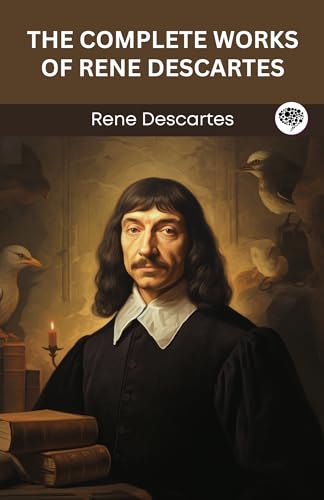
"The Complete Works of Rene Descartes" offers readers an extensive collection of the philosophical writings of one of the most influential figures in the history of Western philosophy. Rene Descartes, known for his foundational contributions to modern philosophy, rationalism, and the mind-body problem, presents his works that have shaped the course of intellectual inquiry for centuries. From his groundbreaking "Meditations on First Philosophy," where he famously declared "Cogito, ergo sum" (I think, therefore I am), to his explorations of mind-body dualism, epistemology, and metaphysics, Descartes' writings provide a comprehensive overview of his profound philosophical insights. This collection includes not only his major treatises but also his lesser-known essays, letters, and correspondence with contemporaries, offering readers a well-rounded understanding of his philosophical development and the context in which he lived. Descartes' ideas continue to spark debates and discussions in philosophy, science, and the humanities. "The Complete Works of Rene Descartes" is an essential resource for scholars, students, and anyone interested in delving into the profound thoughts of this pioneering philosopher.
Authors

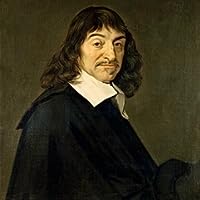
René Descartes, also known as Renatus Cartesius (Latinized form), was a highly influential French philosopher, mathematician, scientist, and writer. He has been dubbed the "Father of Modern Philosophy," and much of subsequent Western philosophy is a response to his writings, which continue to be studied closely. His influence in mathematics is also apparent, the Cartesian coordinate system that is used in plane geometry and algebra being named for him, and he was one of the key figures in the Scientific Revolution. Descartes frequently sets his views apart from those of his predecessors. In the opening section of the Passions of the Soul, a treatise on the Early Modern version of what are now commonly called emotions, he goes so far as to assert that he will write on his topic "as if no one had written on these matters before". Many elements of his philosophy have precedents in late Aristotelianism, the revived Stoicism of the 16th century, or in earlier philosophers like St. Augustine. In his natural philosophy, he differs from the Schools on two major points: First, he rejects the analysis of corporeal substance into matter and form; second, he rejects any appeal to ends—divine or natural—in explaining natural phenomena. In his theology, he insists on the absolute freedom of God’s act of creation. Descartes was a major figure in 17th century continental rationalism, later advocated by Baruch Spinoza and Gottfried Leibniz, and opposed by the empiricist school of thought consisting of Hobbes, Locke, Berkeley, and Hume. Leibniz, Spinoza and Descartes were all versed in mathematics as well as philosophy, and Descartes and Leibniz contributed greatly to science as well. As the inventor of the Cartesian coordinate system, Descartes founded analytic geometry, the bridge between algebra and geometry, crucial to the invention of calculus and analysis. Descartes' reflections on mind and mechanism began the strain of Western thought that much later, impelled by the invention of the electronic computer and by the possibility of machine intelligence, blossomed into the Turing test and related thought. His most famous statement is: Cogito ergo sum (French: Je pense, donc je suis; English: I think, therefore I am), found in §7 of part I of Principles of Philosophy (Latin) and in part IV of Discourse on the Method (French).