Margins
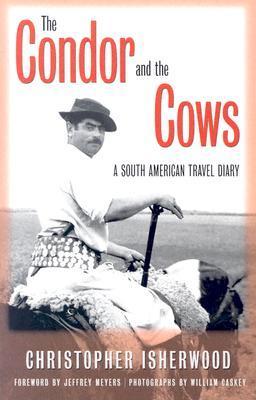
The Condor And The Cows book cover
The Condor And The Cows
1949
First Published
3.79
Average Rating
286
Number of Pages
In September 1947, long before mass tourism and with no knowledge of Spanish, Christopher Isherwood and his lover Bill Caskey left for a six-month tour of Colombia, Ecuador, Peru, Bolivia, and Argentina. Isherwood's account of this journey, The Condor and the Cows, is one of very few classic travel books on South America and was among the books Isherwood considered his best. Based on his trip journal and loosely structured by the vagaries of his travels, these pages give us an Isherwood who dreams of voluntary exile in the tropical paradise of Curaçao and dines out on stories of Nazis in Berlin, missionaries in China, and movie stars in Hollywood. He describes the surprising and sometimes unnerving people and places he encounters through telling, cinematic details-of Inca drinking vessels, the Spanish colonial city of Cuzco (which he calls "one of the most beautiful monuments to bigotry and sheer brutal stupidity in the whole world"), a bullfight in Bogotá, the towering ruins of Machu Picchu. Unsentimental, rich, and wonderfully rendered, this expanded edition includes additional photographs by Bill Caskey and a new foreword by Jeffrey Meyers.

Avg Rating
3.79
Number of Ratings
123
5 STARS
20%
4 STARS
46%
3 STARS
27%
2 STARS
5%
1 STARS
2%
goodreads

Author

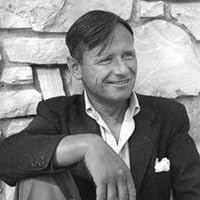
Christopher Isherwood
Author · 32 books

British-born American writer Christopher William Bradshaw Isherwood portrayed Berlin in the early 1930s in his best known works, such as Goodbye to Berlin (1939), the basis for the musical Cabaret (1966). Isherwood was a novelist, playwright, screenwriter, autobiographer, and diarist. With W.H. Auden he wrote three plays—The Dog Beneath the Skin (1932), The Ascent of F6 (1936), and On the Frontier (1938). Isherwood tells the story in his first autobiography, Lions and Shadows . After Isherwood wrote joke answers on his second-year exams, Cambridge University in 1925 asked him to leave. He briefly attended medical school and progressed with his first two novels, All the Conspirators (1928) and The Memorial (1932). In 1930, he moved to Berlin, where he taught English, dabbled in Communism, and enthusiastically explored his homosexuality. His experiences provided the material for Mister Norris Changes Trains (1935) and Goodbye to Berlin (1938), still his most famous book. In Berlin in 1932, he also began an important relationship with Heinz Neddermeyer, a young German with whom he fled the Nazis in 1933. England refused entry to Neddermeyer on his second visit in 1934, and the pair moved restlessly about Europe until the Gestapo arrested Neddermeyer in May 1937 and then finally separated them. In 1938, Isherwood sailed with Auden to China to write Journey to a War (1939), about the Sino-Japanese conflict. They returned to England and Isherwood went on to Hollywood to look for movie-writing work. He also became a disciple of the Ramakrishna monk, Swami Prabhavananda, head of the Vedanta Society of Southern California. He decided not to take monastic vows, but he remained a Hindu for the rest of his life, serving, praying, and lecturing in the temple every week and writing a biography, Ramakrishna and His Disciples (1965). In 1945, Isherwood published Prater Violet, fictionalizing his first movie writing job in London in 1933-1934. In Hollywood, he spent the start of the 1950s fighting his way free of a destructive five-year affair with an attractive and undisciplined American photographer, William Caskey. Caskey took the photographs for Isherwood’s travel book about South America, The Condor and The Cows (1947). Isherwood’s sixth novel, The World in the Evening (1954), written mostly during this period, was less successful than earlier ones. In 1953, he fell in love with Don Bachardy, an eighteen-year-old college student born and raised in Los Angeles. They were to remain together until Isherwood’s death. In 1961, Isherwood and completed the final revisions to his new novel Down There on a Visit (1962). Their relationship nearly ended in 1963, and Isherwood moved out of their Santa Monica house. This dark period underpins Isherwood’s masterpiece A Single Man (1964). Isherwood wrote another novel, A Meeting by the River (1967), about two brothers, but he gave up writing fiction and turned entirely to autobiography. In Kathleen and Frank (1971), he drew on the letters and diaries of his parents. In Christopher and His Kind (1976), he returned to the 1930s to tell, as a publicly avowed homosexual, the real story of his life in Berlin and his wanderings with Heinz Neddermeyer. The book made him a hero of gay liberation and a national celebrity all over again but now in his true, political and personal identity.

548 Market St PMB 65688, San Francisco California 94104-5401 USA
© 2026 Paratext Inc. All rights reserved