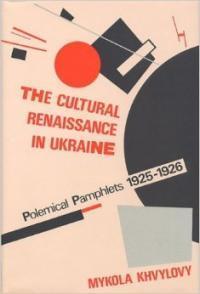



In 1923 the Soviet Ukrainian government proclaimed a policy of Ukrainization. In the years of relative autonomy that followed, a wide-ranging debate took place that raised issues of vital importance for Ukrainian culture. What was to be the character of Ukrainian literature? How would it be affected by the cultural values of the past? What would be its relations with Russian literature? How would the Revolution affect the production of new literary works? More than any other figure, Mykola Khvylovy, dominated this debate, which came to be known as the Literary Discussion. He argued in his pamphlets that Ukrainian literature should take an independent path, abandoning its former reliance on Russian models and seeking inspiration from European sources. His outspoken advocacy of this course soon brought him into conflict with Stalin's regime and drove him to suicide in 1933. After Khvylovy's death, his works were banned in the Soviet Union, and the name of this most prominent Ukrainian prose writer of the post-revolutionary years was systematically expunged from the record books. The issues that he raised have, however, survived both him and his antagonists. This volume represents the first English-language collection of his polemical writings.
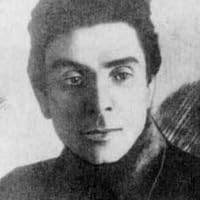
Author

Mykola Khvylovy (Ukrainian: Микола Хвильовий, Khvyl’ovyy) (December 13 [O.S. December 1] 1893 – May 13, 1933) was a Ukrainian writer and poet of the early Communist era Ukrainian Renaissance (1920–1930). Born as Mykola Fitilyov in Trostyanets, Kharkov Governorate to a Russian laborer father and Ukrainian schoolteacher mother, Khvylovy joined the Communist Party in 1919. In the same year he became the chief of local Cheka in Bohodukhiv povit. He moved to Kharkiv in 1921 and involved himself with writers connected to Vasyl Blakytny and the paper Visti VUTsVK (news from All-Ukrainian Central Executive Committee). In 1921, he also published his first poetry collection. In 1922, he began to focus more on prose writing. His initial collections Syni etiudy (Blue Etudes, 1923) and Osin’ (Autumn, 1924) generated approval from critics like Serhiy Yefremov, Oleksander Biletsky, Volodymyr Koriak, Yevhen Malaniuk and Dmytro Dontsov. His impressions of the work as a CheKa officer are reflected in his 1924 novel "I (Romance)", the hero of which - the head of the local Cheka - sentenced his mother to death in the name of the ideals of the revolution. A brief member of the literary organization Hart, Khvylovy later became critical of it and the organization Pluh and became a key leader of the VAPLITE organization of Ukrainian "proleteriat" writers. Because of Stalin's repressions against his friends in the pro-Ukrainian Communist movement, Khvylovy committed suicide on 13 May 1933 in front of his friends in his apartment in Kharkiv. His suicide note said: "Arrest of Yalovy - this is the murder of an entire generation ... For what? Because we were the most sincere Communists? I don't understand. The responsibility for the actions of Yalovy's generation lies with me, Khvylovy. Today is a beautiful sunny day. I love life - you can't even imagine how much. Today is the 13th. Remember I was in love with this number? Terribly painful. Long live communism. Long live the socialist construction. Long live the Communist Party."[1] After his death, his works were banned in the Soviet Union and because of his symbolic potency were mostly not permitted until near the end or after the collapse of the Soviet Union.