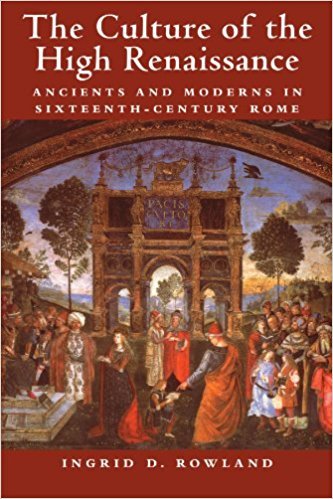
The Culture of the High Renaissance
Ancients and Moderns in Sixteenth-Century Rome
1998
First Published
4.33
Average Rating
446
Number of Pages
Between 1480 and 1520, a concentration of talented artists, including Melozzo da Forlì, Bramante, Pinturicchio, Raphael, and Michelangelo, arrived in Rome and produced some of the most enduring works of art ever created. This period, now called the High Renaissance, is generally considered to be one of the high points of Western civilisation. How did it come about, and what were the forces that converged to spark such an explosion of creative activity? In this study, Ingrid Rowland examines the culture, society, and intellectual norms that generated the High Renaissance. This interdisciplinary 2001 study assesses the intellectual paradigm shift that occurred at the turn of the fifteenth century. It also finds and explains the connections between ideas, people, and the art works they created by looking at economics, art, contemporary understanding of classical antiquity, and social conventions.

Avg Rating
4.33
Number of Ratings
12
5 STARS
33%
4 STARS
67%
3 STARS
0%
2 STARS
0%
1 STARS
0%
goodreads
Author
Ingrid D. Rowland
Author · 8 books
Ingrid Drake Rowland is a professor at the University of Notre Dame School of Architecture. She is a frequent contributor to The New York Review of Books. Based in Rome, Rowland writes about Italian art, architecture, history and many other topics for The New York Review of Books. She is the author of the books Giordano Bruno: Philospher/Heretic (Farrar, Straus, and Giroux, 2008); The Place of the Antique in Early Modern Europe; The Culture of the High Renaissance: Ancients and Moderns in Sixteenth Century Rome; The Roman Garden of Agostino Chigi Horst Gerson Memorial Lecture, Groningen: University of Groningen, 2005; The Scarith of Scornello: a Tale of Renaissance Forgery (University of Chicago Press, 2004). Her essays in The New York Review of Books were collected in From Heaven to Arcadia: The Sacred and the Profane in the Renaissance (New York Review Books, 2005).