


New to Penguin Classics, the astonishing story of the Copernican Revolution, told through the words of the ground-breaking scientists who brought it about A Penguin Classic In the late fifteenth century, the earth stood motionless at the center of a small, ordered cosmos. Around us, it was believed, the moon, the sun, and the planets revolved in crystalline spheres, their orbits perfect, eternally unchanging circles. Just over a century later, the sun was now the center of creation; the earth just another planet hurtling through empty, near-infinite space. This is the story of an astonishing change, a transformation in human thought, about both the universe and our place within it, told through the words of the astronomers and mathematicians at its heart. Encompassing the most evocative excerpts from the works and letters of Copernicus, Galileo, Kepler, Descartes, Newton, and others, and including guiding notes from renowned historian of science, Aviva Rothman, The Dawn of Modern Cosmology is the definitive record of one of science's greatest achievements.
Authors

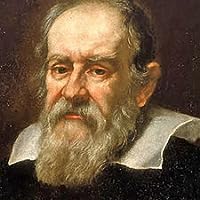
Galileo Galilei was a Tuscan (Italian) physicist, mathematician, astronomer, and philosopher who played a major role in the Scientific Revolution. His achievements include improvements to the telescope and consequent astronomical observations, and support for Copernicanism. Galileo has been called the "father of modern observational astronomy", the "father of modern physics", the "father of science", and "the Father of Modern Science." The motion of uniformly accelerated objects, taught in nearly all high school and introductory college physics courses, was studied by Galileo as the subject of kinematics. His contributions to observational astronomy include the telescopic confirmation of the phases of Venus, the discovery of the four largest satellites of Jupiter, named the Galilean moons in his honour, and the observation and analysis of sunspots. Galileo also worked in applied science and technology, improving compass design. Galileo's championing of Copernicanism was controversial within his lifetime. The geocentric view had been dominant since the time of Aristotle, and the controversy engendered by Galileo's presentation of heliocentrism as proven fact resulted in the Catholic Church's prohibiting its advocacy as empirically proven fact, because it was not empirically proven at the time and was contrary to the literal meaning of Scripture. Galileo was eventually forced to recant his heliocentrism and spent the last years of his life under house arrest on orders of the Roman Inquisition.

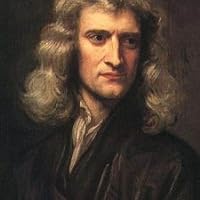
Sir Isaac Newton, FRS, was an English physicist, mathematician, astronomer, natural philosopher, and alchemist. His Philosophiæ Naturalis Principia Mathematica, published in 1687, is considered to be the most influential book in the history of science. In this work, Newton described universal gravitation and the three laws of motion, laying the groundwork for classical mechanics, which dominated the scientific view of the physical universe for the next three centuries and is the basis for modern engineering. Newton showed that the motions of objects on Earth and of celestial bodies are governed by the same set of natural laws by demonstrating the consistency between Kepler's laws of planetary motion and his theory of gravitation, thus removing the last doubts about heliocentrism and advancing the scientific revolution. In mechanics, Newton enunciated the principles of conservation of momentum and angular momentum. In optics, he invented the reflecting telescope and developed a theory of colour based on the observation that a prism decomposes white light into a visible spectrum. He also formulated an empirical law of cooling and studied the speed of sound. In mathematics, Newton shares the credit with Gottfried Leibniz for the development of the differential and integral calculus. He also demonstrated the generalised binomial theorem, developed the so-called "Newton's method" for approximating the zeroes of a function, and contributed to the study of power series. Newton was also highly religious (though unorthodox), producing more work on Biblical hermeneutics than the natural science he is remembered for today. In a 2005 poll of the Royal Society asking who had the greater effect on the history of science, Newton was deemed much more influential than Albert Einstein.

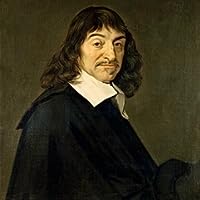
René Descartes, also known as Renatus Cartesius (Latinized form), was a highly influential French philosopher, mathematician, scientist, and writer. He has been dubbed the "Father of Modern Philosophy," and much of subsequent Western philosophy is a response to his writings, which continue to be studied closely. His influence in mathematics is also apparent, the Cartesian coordinate system that is used in plane geometry and algebra being named for him, and he was one of the key figures in the Scientific Revolution. Descartes frequently sets his views apart from those of his predecessors. In the opening section of the Passions of the Soul, a treatise on the Early Modern version of what are now commonly called emotions, he goes so far as to assert that he will write on his topic "as if no one had written on these matters before". Many elements of his philosophy have precedents in late Aristotelianism, the revived Stoicism of the 16th century, or in earlier philosophers like St. Augustine. In his natural philosophy, he differs from the Schools on two major points: First, he rejects the analysis of corporeal substance into matter and form; second, he rejects any appeal to ends—divine or natural—in explaining natural phenomena. In his theology, he insists on the absolute freedom of God’s act of creation. Descartes was a major figure in 17th century continental rationalism, later advocated by Baruch Spinoza and Gottfried Leibniz, and opposed by the empiricist school of thought consisting of Hobbes, Locke, Berkeley, and Hume. Leibniz, Spinoza and Descartes were all versed in mathematics as well as philosophy, and Descartes and Leibniz contributed greatly to science as well. As the inventor of the Cartesian coordinate system, Descartes founded analytic geometry, the bridge between algebra and geometry, crucial to the invention of calculus and analysis. Descartes' reflections on mind and mechanism began the strain of Western thought that much later, impelled by the invention of the electronic computer and by the possibility of machine intelligence, blossomed into the Turing test and related thought. His most famous statement is: Cogito ergo sum (French: Je pense, donc je suis; English: I think, therefore I am), found in §7 of part I of Principles of Philosophy (Latin) and in part IV of Discourse on the Method (French).