Margins




548 Market St PMB 65688, San Francisco California 94104-5401 USA
© 2026 Paratext Inc. All rights reserved
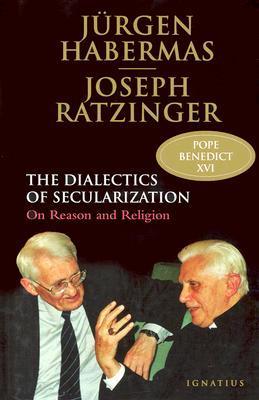
Two of the worlds great contemporary thinkers—theologian and churchman Joseph Ratzinger, now Pope Benedict XVI, and Jurgen Habermas, philosopher and Neo-Marxist social critic—discuss and debate aspects of secularization, and the role of reason and religion in a free society. These insightful essays are the result of a remarkable dialogue between the two men, sponsored by the Catholic Academy of Bavaria, a little over a year before Joseph Ratzinger was elected pope. Jurgen Habermas has surprised many observers with his call for "the secular society to acquire a new understanding of religious convictions", as Florian Schuller, director of the Catholic Academy of Bavaria, describes it his foreword. Habermas discusses whether secular reason provides sufficient grounds for a democratic constitutional state. Joseph Ratzinger/Benedict XVI argues for the necessity of certain moral principles for maintaining a free state, and for the importance of genuine reason and authentic religion, rather than what he calls "pathologies of reason and religion", in order to uphold the states moral foundations. Both men insist that proponents of secular reason and religious conviction should learn from each other, even as they differ over the particular ways that mutual learning should occur.