Margins
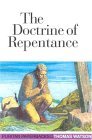
The Doctrine of Repentance book cover
The Doctrine of Repentance
1688
First Published
4.54
Average Rating
96
Number of Pages
‘ The Doctrine of Repentance is probably one of the most needed books, not only for us as ministers, but for our people, because repentance is so trivialized today. [This book] stresses the need for ongoing repentance, a daily repentance, a lifestyle of repentance. Like Luther said, “God will have his people repenting all life long.” Watson shows you how to do that.’ — JOEL BEEKE A good case could be made out for believing that ‘repentance’ is one of the least used words in the Christian church today. Few better guides have existed in this or any other area of spiritual experience than Thomas Watson. He was a master of both Scripture and the human heart, and wrote with a simplicity and directness that keeps his work fresh and powerful for the twenty-first century.

Avg Rating
4.54
Number of Ratings
2,001
5 STARS
65%
4 STARS
27%
3 STARS
7%
2 STARS
1%
1 STARS
0%
goodreads

Author

Thomas Watson
Thomas Watson
Author · 24 books

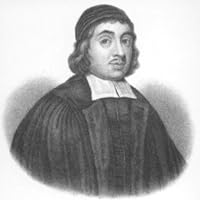
Librarian Note: There is more than one author in the Goodreads database with this name. Thomas Watson (c. 1620 - 1686) was an English, non-conformist, Puritan preacher and author. He was educated at Emmanuel College, Cambridge, where he was noted for remarkably intense study. In 1646 he commenced a sixteen year pastorate at St. Stephen's, Walbrook. He showed strong Presbyterian views during the civil war, with, however, an attachment to the king, and in 1651 he was imprisoned briefly with some other ministers for his share in Christopher Love's plot to recall Charles II of England. He was released on 30 June 1652, and was formally reinstated as vicar of St. Stephen's Walbrook. He obtained great fame and popularity as a preacher until the Restoration, when he was ejected for nonconformity. Not withstanding the rigor of the acts against dissenters, Watson continued to exercise his ministry privately as he found opportunity. Upon the Declaration of Indulgence in 1672 he obtained a license to preach at the great hall in Crosby House. After preaching there for several years, his health gave way, and he retired to Barnston, Essex, where he died suddenly while praying in secret. He was buried on 28 July 1686. (Information from wikipedia.org)

548 Market St PMB 65688, San Francisco California 94104-5401 USA
© 2026 Paratext Inc. All rights reserved