


Margins
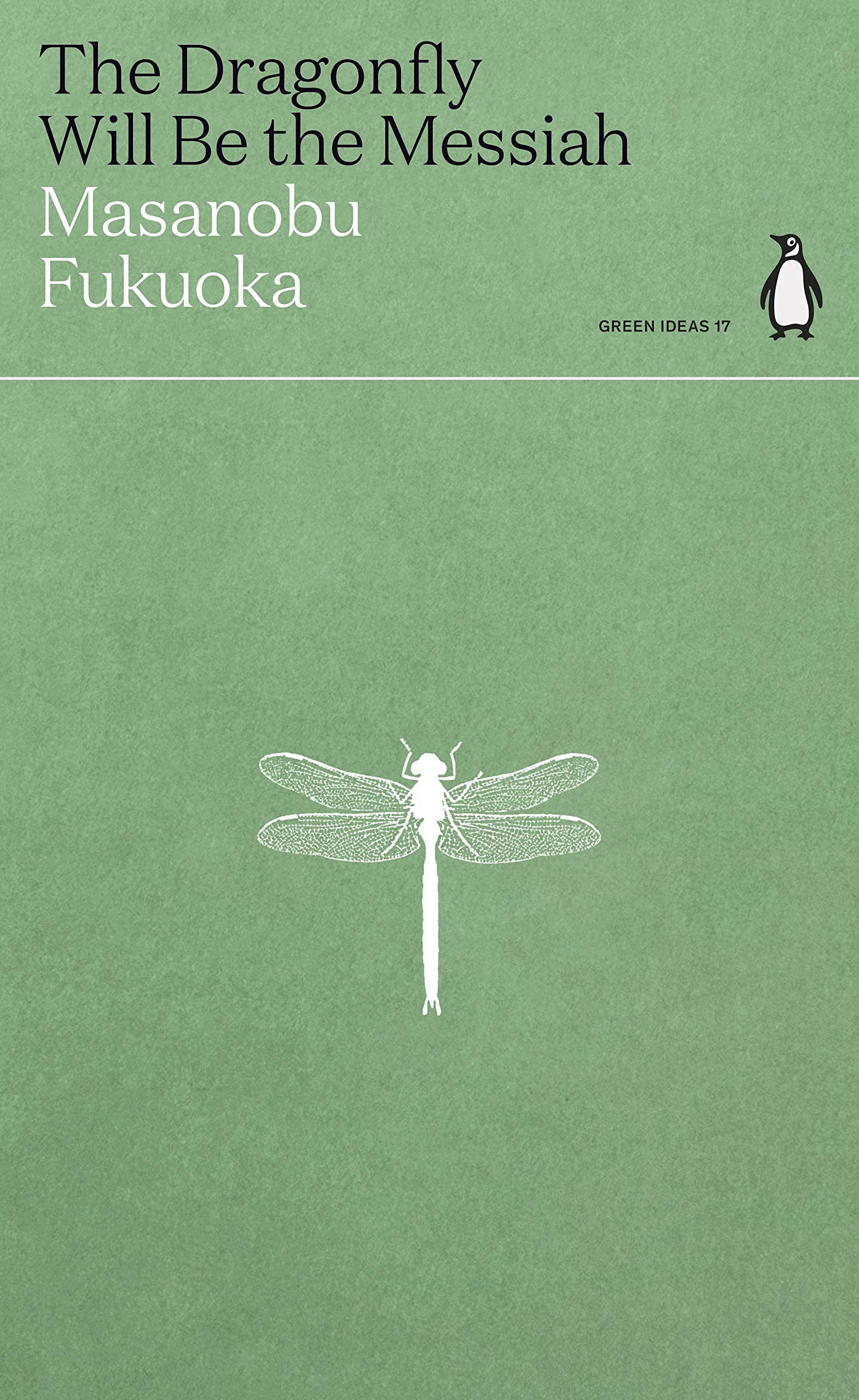
The Dragonfly Will Be the Messiah book cover
The Dragonfly Will Be the Messiah
2021
First Published
3.53
Average Rating
96
Number of Pages

In twenty short books, Penguin brings you the classics of the environmental movement. In The Dragonfly Will Be the Messiah, the celebrated pioneer of the 'do-nothing' farming method reflects on global ecological trauma and argues that we must radically transform our understanding of both nature and ourselves in order to have any chance of healing. Over the past 75 years, a new canon has emerged. As life on Earth has become irrevocably altered by humans, visionary thinkers around the world have raised their voices to defend the planet, and affirm our place at the heart of its restoration. Their words have endured through the decades, becoming the classics of a movement. Together, these books show the richness of environmental thought, and point the way to a fairer, saner, greener world.
Avg Rating
3.53
Number of Ratings
375
5 STARS
17%
4 STARS
36%
3 STARS
33%
2 STARS
11%
1 STARS
3%
goodreads

Author

Masanobu Fukuoka
Masanobu Fukuoka
Author · 6 books

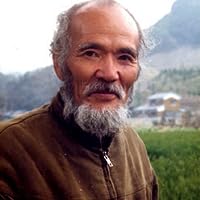
Masanobu Fukuoka was born in 1914 in a small farming village on the island of Shikoku in Southern Japan. He was educated in microbiology and worked as a soil scientist specializing in plant pathology, but at the age of twenty-five he began to have doubts about the "wonders of modern agriculture science." While recovering from a severe attack of pneumonia, Fukuoka experienced a moment of satori or personal enlightenment. He had a vision in which something one might call true nature was revealed to him. He saw that all the "accomplishments" of human civilization are meaningless before the totality of nature. He saw that humans had become separated from nature and that our attempts to control or even understand all the complexities of life were not only futile, they were self-destructive. From that moment on, he has spent his life trying to return to the state of being one with nature. At the time of his revelation, Fukuoka was living in a Japan that was abandoning its traditional farming methods and adopting Western agriculture, economic and industrial models. He saw how this trend was driving the Japanese even further from a oneness with nature, and how destructive and polluting those practices were. As a result, he resigned his job as a research scientist and returned to his father's farm on Shikoku determined to demonstrate the practical value of his vision by restoring the land to a condition that would enable nature's original harmony to prevail. Through 30 years of refinement he was able to develop a "do-nothing" method of farming. Without soil cultivation such as plowing or tilling, chemical fertilizers, pesticides, weeding, pruning, machinery or compost, Fukuoka was able to produce high-quality fruit, vegetables and grains with yields equal to or greater than those of any neighboring farm. In his 60's, Fukuoka sat down to document what he had seen and done. In 1975 his first book "One Straw Revolution" was released and has had a profound impact on agriculture and human consciousness all over the world. "One Straw Revolution" was followed by "The Natural Way of Farming" and then by "The Road Back To Nature." Since 1979, Fukuoka has been touring, giving lectures and sowing the seeds of natural farming all over the world. In 1988 he was given Deshikottan Award, and the Ramon Magsaysay Award. In 1997 he received the Earth Council Award. from http://fukuokafarmingol.info/fintro.html

548 Market St PMB 65688, San Francisco California 94104-5401 USA
© 2026 Paratext Inc. All rights reserved