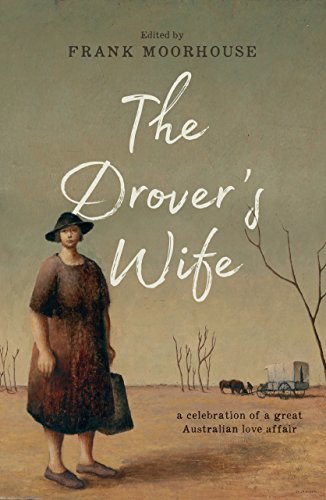



Since Henry Lawson wrote his story 'The Drover's Wife' in 1892, Australian writers, painters, performers and photographers have created a wonderful tradition of drover's wife works, stories and images. The Russell Drysdale painting from 1945 extended the mythology and it, too, has become an Australian icon. Other versions of the Lawson story have been written by Murray Bail, Barbara Jefferis, Mandy Sayer, David Ireland, Madeleine Watts and others, up to the present, including Leah Purcell's play and Ryan O'Neill's graphic novel. In essays and commentary, Frank Moorhouse examines our ongoing fascination with this story and has collected some of the best pieces of writing on the subject. This remarkable, gorgeous book is, he writes, 'a monument to the drovers' wives'.
Author
Frank Thomas Moorhouse AM (21 December 1938 – 26 June 2022) was an Australian writer. He won major Australian national prizes for the short story, the novel, the essay, and for script writing. His work has been published in the United Kingdom, France, and the United States and also translated into German, Spanish, Chinese, Japanese, Serbian, and Swedish. Moorhouse was perhaps best known for winning the 2001 Miles Franklin Literary Award for his novel, Dark Palace; which together with Grand Days and Cold Light, the "Edith Trilogy" is a fictional account of the League of Nations, which trace the strange, convoluted life of a young woman who enters the world of diplomacy in the 1920s through to her involvement in the newly formed International Atomic Energy Agency after World War II. The author of 18 books, Moorhouse became a full-time fiction writer during the 1970s, also writing essays, short stories, journalism and film, radio and TV scripts. In his early career he developed a narrative structure which he has described as the 'discontinuous narrative'. He lived for many years in Balmain, where together with Clive James, Germaine Greer and Robert Hughes, he became part of the "Sydney Push" - an anti-censorship movement that protested against rightwing politics and championed freedom of speech and sexual liberation. In 1975 he played a fundamental role in the evolution of copyright law in Australia in the case University of New South Wales v Moorhouse. - Wikipedia