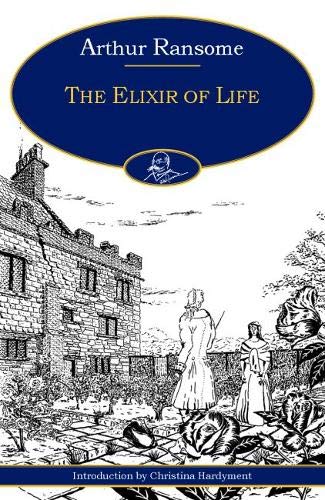



“I have done my best to drive away the feeling of death,” she said. “There is that feeling in every room of this oldhouse, which has lain empty so long. There is a feeling of death even in the park that surrounds it. But there is one little plot that has been saved from the wilderness. That is the rose-garden. The roses alone seem untouched by thefinger of death.” For Richard Stanborough an invitation to Killigrew Hall offers an opportunity to pursue his passion for philosophy. But the hall hides philosophy’s darkest secret. Soon Richard will have to choose between life, death and love. Yet how can he, when the very meaning of life itself has changed? Thriller, horror and historical romance, The Elixir of Life is both Arthur Ransome’s first published novel and the only one he wrote for adults. As Christina Hardyment’s introduction explains, it is utterly unlike Swallows and Amazons and its sequels. Even so, readers familiar with the latter will find hints in The Elixir of the celebrated novelist Ransome would become, whilst all may enjoy this fast-paced and unusual thriller.
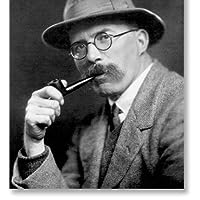
Author

Arthur Michell Ransome (January 18, 1884 – June 3, 1967) was an English author and journalist. He was educated in Windermere and Rugby. In 1902, Ransome abandoned a chemistry degree to become a publisher's office boy in London. He used this precarious existence to practice writing, producing several minor works before Bohemia in London (1907), a study of London's artistic scene and his first significant book. An interest in folklore, together with a desire to escape an unhappy first marriage, led Ransome to St. Petersburg, where he was ideally placed to observe and report on the Russian Revolution. He knew many of the leading Bolsheviks, including Lenin, Radek, Trotsky and the latter's secretary, Evgenia Shvelpina. These contacts led to persistent but unproven accusations that he "spied" for both the Bolsheviks and Britain. Ransome married Evgenia and returned to England in 1924. Settling in the Lake District, he spent the late 1920s as a foreign correspondent and highly-respected angling columnist for the Manchester Guardian, before settling down to write Swallows and Amazons and its successors. Today Ransome is best known for his Swallows and Amazons series of novels, (1931 - 1947). All remain in print and have been widely translated. Arthur Ransome died in June 1967 and is buried at Rusland in the Lake District.