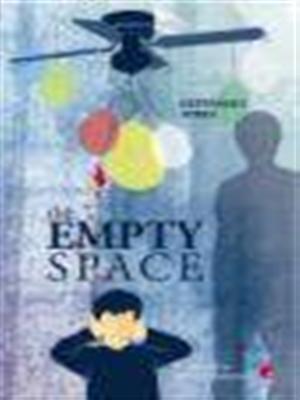



A bomb explodes in a university café, claiming the lives of nineteen students. The Empty Space begins with the identification of those nineteen dead. The mother who enters the café last to identify the nineteenth body brings home her dead eighteen-year-old son packed in a box, as well as the sole survivor of the blast, a three-year-old boy who, by a strange quirk of fate, is found lying in a small empty space, alive and breathing. The Empty Space chronicles the memories of the boy gone, the story of the boy brought home, and the cataclysmic crossing of life and death.

Author

Geetanjali Shree गीताजंली क्ष्री (She was known as Geentanjali Pandey, and she took her mother's first name Shree as her last name) (born 1957) is a Hindi novelist and short story writer based in New Delhi, India. She is the author of several short stories and three novels. Mai was short listed for the Crossword Book Award in 2001. She has also written a critical work on Premchand. Her first story, Bel Patra (1987) was published in the literary magazine Hans and was followed by a collection of short stories Anugoonj (1991) The English translation of her novel Mai catapulted her into fame. The novel is about three generations of women and the men around them, in a North Indian middle-class family. Mai is translated into Serbian, Korean and German. It has been translated into English by Nita Kumar, who was awarded the Sahitya Akademi award for the translation. It has been also translated into Urdu by Bashir Unwan with preface by Intizar Hussain. Furthermore, it has been translated into other languages: into French by Annie Montaut, into German by Reinhold Schein... Her second novel Hamara Shahar Us Baras set loosely after the incidents of Babri Masjid demolition.