


Margins
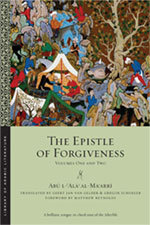
The Epistle of Forgiveness book cover
The Epistle of Forgiveness
Volumes One and Two
1033
First Published
3.83
Average Rating
530
Number of Pages

Known as one of the most complex and unusual texts in Arabic literature (Banipal Magazine), The Epistle of Forgiveness is the lengthy reply by the prolific Syrian poet and prose writer, Abu l-'Ala' al-Ma'arri (d. 449 H/1057 AD), to a letter by an obscure grammarian, Ibn al-Qari. With biting irony, The Epistle of Forgiveness mocks Ibn al-Qari s hypocrisy and sycophancy by imagining he has died and arrived with some difficulty in Heaven, where he meets famous poets and philologists from the past. In al-Maarri s imaginative telling, Ibn al-Qari also glimpses Hell and converses with the Devil and various heretics. Al-Ma'arri a maverick, a vegan, and often branded a heretic himself seems to mock popular ideas about the Hereafter. Among other things, he introduces us to hypocrites, poets, princes, rebels, mystics, and apostates, with asides on piety, superstition, wine-drinking, old age, and other topics. This remarkable book is the first complete translation of this masterpiece into any language, all the more impressive because of Al-Ma'arri's highly ornate and difficult style, his use of rhymed prose, and his numerous obscure words and expressions. Replete with erudite commentary, amusing anecdotes, and sardonic wit, The Epistle of Forgiveness is an imaginative tour-de-force by one of the most pre-eminent figures in classical Arabic literature. " Geert Jan van Gelder studied Semitic Languages in Amsterdam and Leiden. He was Lecturer in Arabic at the University of Groningen (1975-1998) and Laudian Professor of Arabic at the University of Oxford (1998-2012). He has published numerous articles and several books on classical Arabic literature. Gregor Schoeler studied Arabic and Islamic Studies in Frankfurt am Main and Giessen (Germany). He was the chair of Islamic Studies at the University of Basel (1982-2009). He has published numerous articles and several books in the fields of Islamic Studies and classical Arabic literature.
Avg Rating
3.83
Number of Ratings
35
5 STARS
37%
4 STARS
26%
3 STARS
23%
2 STARS
11%
1 STARS
3%
goodreads

Author

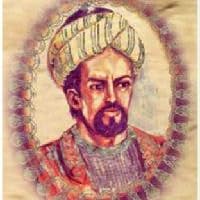
Abu al-Ala al-Maarri
Author · 5 books

Abul ʿAla Al-Maʿarri (Arabic أبو العلاء المعري Abū al-ʿAlāʾ al-Maʿarrī, full name أبو العلاء أحمد بن عبد الله بن سليمان التنوخي المعري Abū al-ʿAlāʾ Aḥmad ibn ʿAbd Allāh ibn Sulaimān al-Tanūẖī al-Maʿarrī, born 973 CE / AH 363, died 1058 CE/ AH 449) was a blind Syrian philosopher, poet, and writer. He was a controversial rationalist of his time, attacking the dogmas of religion rejecting the claim that Islam or any other religion possessed the truths they claim and considered the speech of prophets as a lie (literally, "forge") and "impossible" to be true. He was equally sarcastic towards the religions of Muslims, Jews, and Christians. He was also a vegan who argued for animal rights. In 2013, almost a thousand years after his death, a Jihadist group beheaded the statue of Al Ma'arri during the conflict in Syria. Al Ma'arri remains widely cited among modern Arab atheists. Al-Maʿarri was a skeptic in his beliefs and denounced superstition and dogmatism in religion. Thus, he has been described as a pessimistic freethinker. One of the recurring themes of his philosophy was the rights of reason against the claims of custom, tradition, and authority. Al-Maʿarri taught that religion was a "fable invented by the ancients", worthless except for those who exploit the credulous masses. Do not suppose the statements of the prophets to be true; they are all fabrications. Men lived comfortably till they came and spoiled life. The sacred books are only such a set of idle tales as any age could have and indeed did actually produce. Al-Maʿarri criticized many of the dogmas of Islam, such as the Hajj, which he called, "a heathen's journey." He rejected claims of any divine revelation. His creed was that of a philosopher and ascetic, for whom reason provides a moral guide, and virtue is its own reward. His religious skepticism and positively anti-religious views are expressed in a poem which states, "The inhabitants of the earth are of two sorts: those with brains, but no religion, and those with religion, but no brains." He was equally sarcastic towards the religion of Islam as he was towards Judaism and Christianity. Al-Ma'arri remarked that monks in their cloisters or devotees in their mosques were blindly following the beliefs of their locality: if they were born among Magians or Sabians they would have become Magians or Sabians. More: http://www.humanistictexts.org/al\_ma&... http://www.centerforinquiry.net/isis/... http://www.britannica.com/EBchecked/t... http://futiledemocracy.wordpress.com/...

548 Market St PMB 65688, San Francisco California 94104-5401 USA
© 2026 Paratext Inc. All rights reserved