



Margins
The Federalist Papers
No. 51
1788
First Published
3.87
Average Rating
300
Number of Pages

The Structure of the Government Must Furnish the Proper Checks and Balances Between the Different Departments TO WHAT expedient, then, shall we finally resort, for maintaining in practice the necessary partition of power among the several departments, as laid down in the Constitution? The only answer that can be given is, that as all these exterior provisions are found to be inadequate, the defect must be supplied, by so contriving the interior structure of the government as that its several constituent parts may, by their mutual relations, be the means of keeping each other in their proper places. If men were angels, no government would be necessary. If angels were to govern men, neither external nor internal controls on government would be necessary. In framing a government which is to be administered by men over men, the great difficulty lies in this: you must first enable the government to control the governed; and in the next place oblige it to control itself.
Avg Rating
3.87
Number of Ratings
15
5 STARS
33%
4 STARS
20%
3 STARS
47%
2 STARS
0%
1 STARS
0%
goodreads

Author

Alexander Hamilton
Alexander Hamilton
Author · 20 books

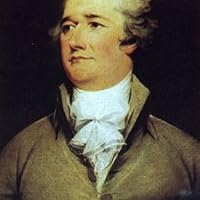
Librarian Note: There is more than one author in the GoodReads database with this name. See this thread for more information. American politician Alexander Hamilton, the first secretary of the treasury of United States from 1789 to 1795, established the national bank and public credit system; a duel with Aaron Burr, his rival, mortally wounded him. One of the Founding Fathers, this economist and philosopher led calls for the convention at Philadelphia and as first Constitutional lawyer co-wrote the Federalist Papers , a primary source for Constitutional interpretation. During the Revolutionary War, he, born in the West Indies but educated in the north, joined the militia, which chose him artillery captain. Hamilton, senior aide-de-camp and confidant to George Washington, general, led three battalions at the siege of Yorktown. People elected him to the Continental congress, but he resigned to practice law and to found in New York. He served in the legislature of New York and later returned to Congress; at the convention in Philadelphia, only he signed the Constitution for New York. Under Washington, then president, he influenced formative government policy widely. Hamilton, an admirer of British, emphasized strong central government and implied powers, under which the new Congress funded and assumed the debts and created an import tariff and whiskey tax. A coalition, the formative Federalist Party, arose around Hamilton, and another coalition, the formative Democratic-Republican Party, arose around Thomas Jefferson and James Madison before 1792; these coalitions differed strongly over domestic fiscal goals and Hamiltonian foreign policy of extensive trade and friendly relations with Britain. Exposed in an affair with Maria Reynolds, Hamilton resigned to return to Constitutional law and advocacy of strong federalism. In 1798, the quasi-war with France led him to argue for an army, which he organized and commanded de facto. Opposition of Hamilton to John Adams, fellow Federalist, contributed to the success of Thomas Jefferson, a Democratic-Republican, in the uniquely deadlocked election of 1800. With defeat of his party, his industrializing ideas lost their former prominence. In 1801, Hamilton founded the Federalist broadsheet New-York Evening Post, now known as the New York Post. His intensity with the vice-president eventually resulted in his death. After the war of 1812, Madison, Albert Gallatin, and other former opponents of the late Hamilton revived some of his federalizing programs, such as infrastructure, tariffs, and a standing Army and Navy. His Federalist and business-oriented economic visions for the country continue to influence party platforms to this day.

548 Market St PMB 65688, San Francisco California 94104-5401 USA
© 2025 Paratext Inc. All rights reserved