Margins




548 Market St PMB 65688, San Francisco California 94104-5401 USA
© 2026 Paratext Inc. All rights reserved
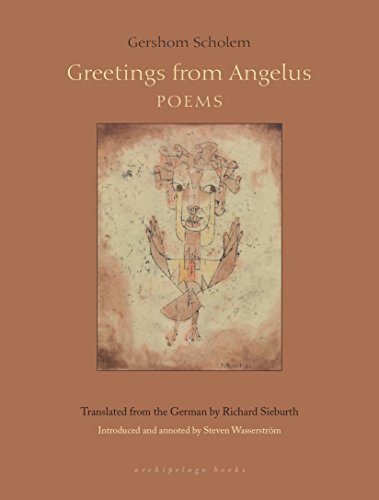
A bilingual collection of poetry from pioneering scholar in Kabbalah and Jewish Mysticism, Gershom Scholem. With this volume, Scholem's work reaches beyond the confines of the academy and enters a literary dialogue with writers and philosophers like Walter Benjamin and Hans Jonas. Gershom Scholem's The Fullness of Time contains dark, lucid political poems about Zionism and assimilation, parodies of German and Jewish philosophers, and poems to writers and friends such as Walter Benjamin, Hans Jonas, Ingeborg Bachmann, S. Y. Agnon, among others. The earliest poems in this volume begin in 1915 and extend to 1967, revealing how poetry played a formative role in Scholem's early life and career. This collection is translated by Richard Sieburth, who comments, "Scholem's acts of poetry still speak to us (and against us) to this very day, simultaneously grounded as they are in the impossibly eternal and profoundly occasional." The volume is edited and introduced by Steven M. Wasserstrom, who carefully situates the poems in Scholem's historical, biographical, and theological landscape.