The Geography of the World Economy provides an in-depth and stimulating introduction to the 'globalization' of the world economy. The book offers a consideration of local, regional, national and global economic development over the long historical term. The theory and practice of economic and political geography provide a basis for understanding the interactions within and among the developed and developing countries of the world. Illustrated in colour throughout, this new edition has been completely reworked and updated to take account of the substantial changes in the world economy, and includes a new chapter on services. It is ideal for upper level university undergraduates and for post-graduates in a variety of specializations including geography, economics, political science, international relations and global studies.
Authors
Agnew is currently Distinguished Professor of Geography at the University of California, Los Angeles (UCLA). From 1975 until 1995 he was a professor at Syracuse University in New York. Dr. Agnew teaches courses on political geography, the history of geography, European cities, and the Mediterranean World. From 1998 to 2002 he chaired the Department of Geography at UCLA. He has written widely on questions of territory, place, and political power. He has also worked on issues of "science" in geography and how knowledge is created and circulates in and across places. He is best known for his work completely reinventing "geopolitics" as a field of study and for his theoretical and empirical efforts at showing how national politics is best understood in terms of the geographical dynamics of "places" and how they are made out of both local and long-distance determinants. Much of his empirical research involves Italy, Greece, and the United States.
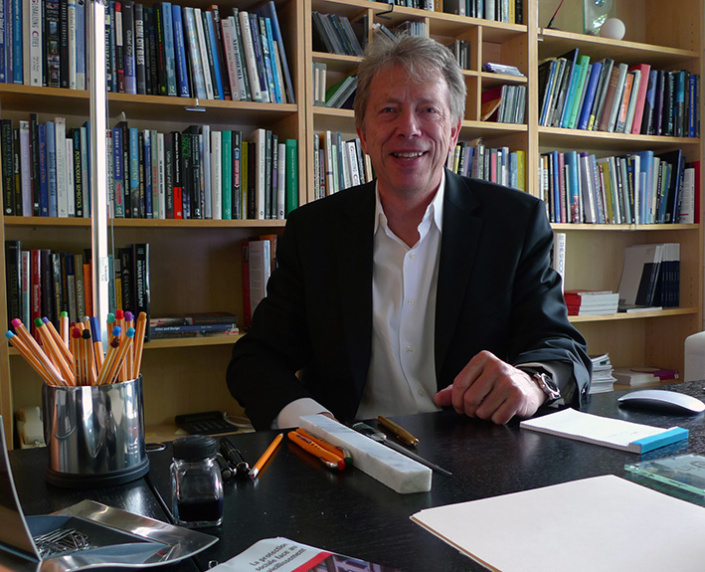
I am an urban geographer and university administrator. I currently serve as Senior Fellow for International Advancement, reporting directly to the President of Virginia Tech. Between 1997 and 2006 I served as Dean of the College of Architecture and Urban Studies and in 2009 I served for a year as Director of the Virginia Bioinformatics Institute. As a member of the Department of Urban Affairs and Planning I have taught courses on urban and regional development theory and comparative urbanization. I currently teach Honors courses on European Urbanization and Urbanism, and on Cities and Design. My research and writing is focused on urban form, and in particular the social construction of the built environment. I am particularly interested in the ways in which the sense of place of small towns and of big-city districts is embodied in the built environment; and in the ways in which social histories are reflected in the architecture of city districts.