Margins




548 Market St PMB 65688, San Francisco California 94104-5401 USA
© 2026 Paratext Inc. All rights reserved
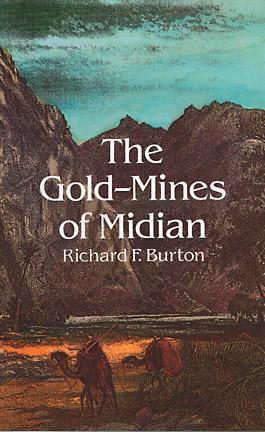
"At last! Once more it is my fate to escape the prison-life of civilized Europe … Again I am to enjoy a glimpse of the 'glorious Desert'; to inhale the sweet pure breath of translucent skies that show the red stars burning upon the very edge and verge of the horizon …" — Richard R. Burton, The Gold-Mines of Midian. One of the great scholar/adventurers of the Victorian era, Sir Richard F. Burton was the author of numerous classic travel books documenting his adventures and exploits in the Near East and Africa. His celebrated Personal Narrative of a Pilgrimage to Al-Madinah and Meccah has long been one of the great books on Arabia. Burton considered this volume a sequel to that work. It is a fascinating chronicle of his 1877 expedition to locate gold and other valuable minerals in the Arabian Peninsula. In his younger days, wandering through Arabia with the Koran for company, Burton had stumbled across a "Gold Land," an area he suspected of being rich in gold and other minerals. At the time he had no interest in trying to extract its wealth. Twenty-five years later, however, when Egypt found itself in dire financial straits, Burton remembered his find. He informed the Khedive of Egypt about it and volunteered to try and relocate the gold field. The Khedive accepted his offer and promptly financed an expedition, headed by Burton, to undertake the search. In all his travel books, Burton reveals himself to have been a shrewd and sharp-eyed observer. This book is no exception. In addition to the exciting story of his successful quest for the gold-mines of Midian, his account is replete with detailed observations and recollections of native peoples, wildlife, plants, minerals, fish, shells, and more. The author's extraordinary erudition and contagious enthusiasm for the vast deserts of Arabia illuminate these pages, which will delight any armchair adventurer or admirer of Burton's work.