


Margins
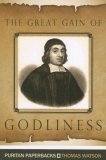
The Great Gain of Godliness book cover
The Great Gain of Godliness
1682
First Published
4.43
Average Rating
100
Number of Pages

C.H. Spurgeon had a well-stocked library of around 12,000 volumes. However, one rare book was not to be found amongst that valuable Thomas Watson on Malachi 3:16-18. With a note of sadness in his voice he said to his College 'This volume would be a great find if we could come at it, for Watson is one of the clearest and liveliest of Puritan authors. We fear we shall never see this commentary, for we have tried to obtain it, and tried in vain'. In this reset and lightly edited edition you can now read the book that was on Spurgeon's 'wish-list'! The Great Gain of Godliness is Watson's exposition of Malachi 3:16-18. In it he aims 'to encourage solid piety and confute the atheists of the world, who imagine there is no gain in godliness.' This book has all the hallmarks of Thomas Watson's other a combination of rich spirituality, nourishing doctrine, and sane practical wisdom coupled with fascinating illustrations and a very pleasant style.
Avg Rating
4.43
Number of Ratings
373
5 STARS
54%
4 STARS
35%
3 STARS
10%
2 STARS
1%
1 STARS
0%
goodreads

Author

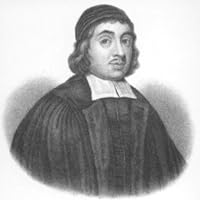
Thomas Watson
Thomas Watson
Author · 24 books

Librarian Note: There is more than one author in the Goodreads database with this name. Thomas Watson (c. 1620 - 1686) was an English, non-conformist, Puritan preacher and author. He was educated at Emmanuel College, Cambridge, where he was noted for remarkably intense study. In 1646 he commenced a sixteen year pastorate at St. Stephen's, Walbrook. He showed strong Presbyterian views during the civil war, with, however, an attachment to the king, and in 1651 he was imprisoned briefly with some other ministers for his share in Christopher Love's plot to recall Charles II of England. He was released on 30 June 1652, and was formally reinstated as vicar of St. Stephen's Walbrook. He obtained great fame and popularity as a preacher until the Restoration, when he was ejected for nonconformity. Not withstanding the rigor of the acts against dissenters, Watson continued to exercise his ministry privately as he found opportunity. Upon the Declaration of Indulgence in 1672 he obtained a license to preach at the great hall in Crosby House. After preaching there for several years, his health gave way, and he retired to Barnston, Essex, where he died suddenly while praying in secret. He was buried on 28 July 1686. (Information from wikipedia.org)

548 Market St PMB 65688, San Francisco California 94104-5401 USA
© 2026 Paratext Inc. All rights reserved