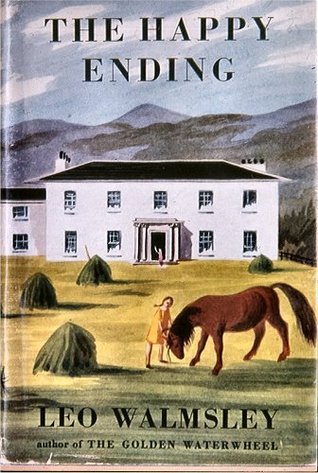
A WARTIME FARM STORY Late 1940: Leo and his young family, their self-styled home by the Yorkshire coast requisitioned by the Ministry, arrive at a remote railway station in south-west Wales. The intention is to farm for the war effort, and provide shelter for evacuee children. But the large house that Leo has bought sight-unseen is almost derelict, and the farmland has been neglected for many years. Making the house habitable and restoring the fields to yield good crops seems an almost insurmountable task, and his dream of building a lake with the elusive golden waterwheel now seems even more unattainable. The Happy Ending follows on from the tales told in Love in the Sun and The Golden Waterwheel, but is also a complete and enchanting story in its own right.
Author

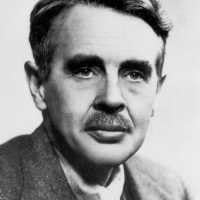
Leo Walmsley was an English writer. He was born in Shipley in West Yorkshire in 1892, and two years later his family moved to Robin Hood's Bay on the coast of present-day North Yorkshire, where he was schooled at the old Wesleyan chapel & the Scarborough Municipal School. He was the son of the painter Ulric Walmsley. In 1912 the young Leo secured the post of curator-caretaker of the Robin Hood's Bay Marine Laboratory at five shillings a week. During World War I he served as an observer with the Royal Flying Corps in East Africa, was mentioned in dispatches four times and was awarded the Military Cross. After a plane crash he was sent home, and eventually pursued a literary career. He settled at Pont Pill near Polruan in Cornwall, where he became friendly with the writer Daphne du Maurier. Many of his books are mainly autobiographical, the best known being his Bramblewick series set in Robin Hood's Bay – Foreigners, Three Fevers, Phantom Lobster and Sally Lunn, the second of which was filmed as Turn of the Tide (1935).