Margins
The History of Bestiality Trilogy book cover 1
The History of Bestiality Trilogy book cover 2
The History of Bestiality Trilogy book cover 3
The History of Bestiality Trilogy
Series · 4 books · 1966-1973

Books in series

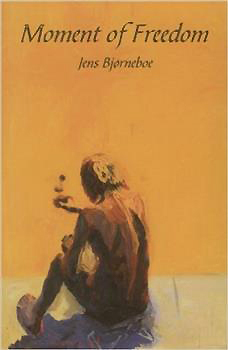
Moment of Freedom book cover
#1

Moment of Freedom

1966

The first novel in the acclaimed ""History of Bestiality"" trilogy. Living high in the Alps in a German principality, our narrator tells us he's dutifully fulfilling his obligations as a Servant of Justice and acting as a daily witness to injustice masquerading as a court of law. One day he notices that the judge is much too engrossed in looking at pornographic photographs showing various other pillars of the town engaged in a variety of sexual activities with minors. The incident propels him on a mental journey back through his black-humor fantasies and suicidal drinking binges; the Roman catacombs, warm summer nights in Brooklyn; brothels in Stockholm, his childhood in Norway, and wanderings in Germany. But aside from court records he has been keeping his own long and detailed account of man's cruelty to man in a massive twelve-volume study he calls his History of Bestiality. Acknowledging his Germanic past, the narrator realizes that all his attempts to perceive order in life lead only to his acceptance of the chaos of life. We see him striving to live uncoerced by power, unpersuaded by friends, to take for himself the liberty of stating his critique in order to live in his own moment of truth, to stand ""far out at the edge of the abyss."" ""Harshly comic and richly disturbing fiction."" Kirkus Reviews
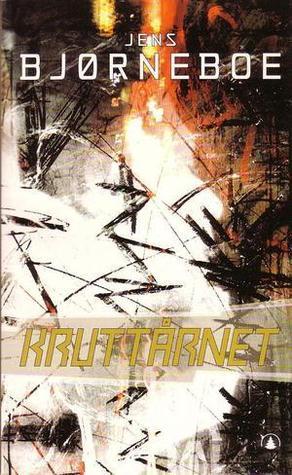
Kruttårnet book cover
#2

Kruttårnet

1969

The story, which is really an anti-story, as this is an anti-novel, is told by Jean, a janitor in a mental hospital in southern France. Just as the narrator in Moment of Freedom did, Jean keeps protocols, keeps for himself a written record of those events occurring around him. Also in the hospital are a strange cast of Dr. Lefevre, the chief physician and Jean s drinking companion, and his Algerian assistant, al Assadun; Ilja, a Russian nurse and anarchist; a French nurse, Christine, who becomes Jean s lover; Lacroix, a professional executioner who is suicidal; Fontaine, a Belgian sex murderer; Dr. Barthory, a wealthy Hungarian who served with the German SS; an American General who killed his Black maid; and the wife of the Russian Ambassador, who is having an affair with the General and has a habit of howling like a wolf. The plot, which is akin to a mystery or espionage potboiler, revolves around the execution-like hanging death at the hospital of Dr. Barthory. Any of the characters could have done it. It s hospital policy that everyone can give a lecture and a large portion of the book is taken up with three the narrator talks about witch symptomatology; Lacroix offers up a powerful, Foucault-like piece on the history of execution, executioners, and capital punishment; and Dr. Lefevre discusses heresy and heretics. Yet, despite its gruesome subject, Powderhouse does not depress, for it is narrated by a man who loves life, with all his senses open to the warmth of a summer night, the tastes of food and wine, the silky skin of his lover. Just like the narrator of Moment of Freedom who strives to live his own moment of truth, whatever brief moments of ecstasy Jean can grasp in this world of pain, suffering, and madness, he grasps with both hands.

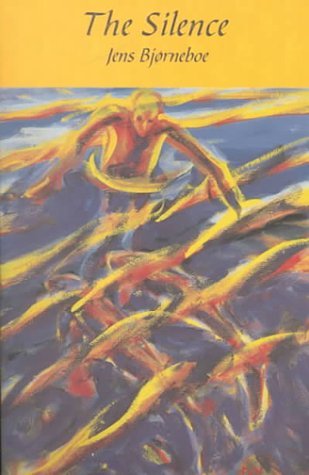
The Silence book cover
#3

The Silence

1973

As with the first two books of this trilogy, The Silence also rejects the traditional modes of fiction to posit instead an essay-like novel of ideas, philosophy, and argumentation. Here the inquiring narrator explores not just European history, as he did in the first two novels, but the crimes committed by Europeans against the rest of humanity in the name of expansion and conquest. Set in northern Africa, the narrator is looking at Europe from the outside. With his friend Ali, an African revolutionary intellectual, he discusses in epic fashion the history of colonialism. He engages in imaginary conversations with Columbus, Robespierre, God, and Satan. He becomes totally immersed in what he perceives as the world's wickedness. Despite its presentation of horrors and man's inhumanity to man, and its grim portrayal of the narrator's long plunge into the tunnel of depression, The Silence does not depress. It praises man's immeasurable capacity for good. ""A riveting work of experimental fiction."" Library Journal
Bestialitetens historie book cover
#13

Bestialitetens historie

Frihetens øyeblikk / Kruttårnet / Stillheten

1966

Bestialitetens historie regnes av mange som hovedverket til Jens Bjørneboe. Gjennom tre frittstående, men tematisk beslektede romaner gjør Bjørneboe nærgående studier av menneskets ulvenatur. Denne ukonvensjonelle og sydende sterke romantrilogien er her samlet i ett bind. Vi følger en rettstjener og hans notater fra et oppsiktsvekkende omstreiferliv i Frihetens øyeblikk, videre en historisk gjennomgang av den hvite manns ødeleggelser i Kruttårnet, og til slutt får vi lese nedtegnelsene til "protokollføreren", som registrerer den ondskap som har fulgt menneskeheten inn i vår egen tid i Stillheten.

Author

Jens Bjørneboe
Jens Bjørneboe
Author · 20 books

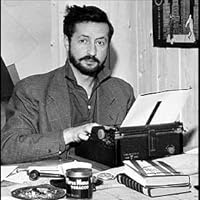
Jens Ingvald Bjørneboe was a Norwegian writer whose work spanned a number of literary formats. He was also a painter and a waldorf school teacher. Bjørneboe was a harsh and eloquent critic of Norwegian society and Western civilization on the whole. He led a turbulent life and his uncompromising humanity would cost him both an obscenity conviction as well as long periods of heavy drinking and bouts of depression, which in the end led to his suicide. Jens Bjørneboe's first published work was Poems (Dikt) in 1951. He is widely considered to be one of Norway's most important post-war authors. Bjørneboe identified himself, among other self-definitions, as an anarcho-nihilist. During the Norwegian language struggle, Bjørneboe was a notable proponent of the Riksmål language, together with his equally famous cousin André Bjerke. Jens Bjørneboe was born in 1920, in Kristiansand to Ingvald and Anna Marie Bjørneboe. He grew up in a wealthy family, his father a shipping magnate and a consul for Belgium. The Bjørneboe family originally immigrated from Germany in the 17th century and later adopted their Norwegian name. Coming from a long line of marine officers, Bjørneboe also went to sea as a young man. Bjørneboe had a troubled childhood with sickness and depressions. He was bedbound for several years following severe pneumonia. At thirteen he attempted suicide by hanging himself. He began drinking when he was twelve, and he would often consume large amounts of wine when his parents were away. It is also rumored that he drank his father's aftershave on several occasions. In 1943 Bjørneboe fled to Sweden to avoid forced labor under the Nazi occupation. During this exile, he met the German Jewish painter Lisel Funk, who later became his first wife. Lisel Funk introduced him to many aspects of German culture, especially German literature and the arts. Bjørneboe's early work was poetry, and his first book was Poems (Dikt, 1951), consisting mainly of deeply religious poetry. Bjørneboe wrote a number of socially critical novels. Among those were Ere the Cock Crows (Før Hanen Galer, 1952), Jonas (1955) and The Evil Shepherd (Den Onde Hyrde, 1960). Ere the Cock Crows is a critique of what Bjørneboe saw as the harsh treatment, after the Second World War, of people suspected of having associated in any way with the Nazis (among them the Norwegian writer and Nobel Prize in Literature winner Knut Hamsun). Jonas deals with injustices and shortcomings of the school system and The Evil Shepherd with the Norwegian prison system. His most significant work is generally considered to be the trilogy The History of Bestiality, consisting of the novels Moment of Freedom (Frihetens Øyeblikk, 1966), Powderhouse (Kruttårnet, 1969) and The Silence (Stillheten, 1973). Bjørneboe also wrote a number of plays, among them The Bird Lovers (Fugleelskerne, 1966), Semmelweis (1968) and Amputation (Amputasjon, 1970), a collaboration with Eugenio Barba and the Danish theatre ensemble Odin Teatret. In 1967, he was convicted for publishing a novel deemed pornographic, Without a Stitch (Uten en tråd, 1966), which was confiscated and banned in Norway. The trial, however, made the book a huge success in foreign editions, and Bjørneboe's financial problems were (for a period) solved. His last major work was the novel The Sharks (Haiene, 1974). After having struggled with depression and alcoholism for a long time, he committed suicide by hanging on May 9, 1976.[2] In his obituary in Aftenposten, Bjørneboe's life and legacy were described as follows: "For 25 years Jens Bjørneboe was a center of unrest in Norwegian cultural life: Passionately concerned with contemporary problems in nearly all their aspects, controversial and with the courage to be so, with a conscious will to carry things to extremes. He was not to be pigeonholed. "

548 Market St PMB 65688, San Francisco California 94104-5401 USA
© 2026 Paratext Inc. All rights reserved