The History of Beyng
1939
First Published
4.05
Average Rating
227
Number of Pages
The History of Beyng belongs to a series of Martin Heidegger's reflections from the 1930s that concern how to think about being not merely as a series of occurrences, but as essentially historical or fundamentally as an event. Beginning with Contributions to Philosophy (Of the Event), these texts are important for their meditations on the oblivion and abandonment of being, politics, and race, and for their incisive critique of power, force, and violence. Originally published in 1998 as volume 69 of Heidegger's Complete Works, this English translation opens new avenues for understanding the trajectory of Heidegger's thinking during this crucial time.

Avg Rating
4.05
Number of Ratings
22
5 STARS
45%
4 STARS
27%
3 STARS
18%
2 STARS
5%
1 STARS
5%
goodreads
Author

Martin Heidegger
Author · 91 books
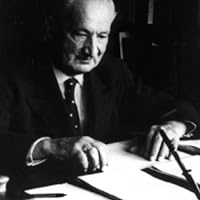
Martin Heidegger (1889-1976) was a German philosopher whose work is perhaps most readily associated with phenomenology and existentialism, although his thinking should be identified as part of such philosophical movements only with extreme care and qualification. His ideas have exerted a seminal influence on the development of contemporary European philosophy. They have also had an impact far beyond philosophy, for example in architectural theory (see e.g., Sharr 2007), literary criticism (see e.g., Ziarek 1989), theology (see e.g., Caputo 1993), psychotherapy (see e.g., Binswanger 1943/1964, Guignon 1993) and cognitive science (see e.g., Dreyfus 1992, 2008; Wheeler 2005; Kiverstein and Wheeler forthcoming).