Two men and a boy, on the boat they charter to game-fishermen, are lazing away the hottest hours of a Caribbean day when they notice a cameo which appears to be adrift. They manoeuvre it alongside their boat, one of the men reaches to pull back the tarpaulin which conceals whatever it contains—and the reader receives a jolting shock which reminds him of those famous first pages of Jaws. Thus starts one of the many mysterious marine incidents which, over the years, have been explained this way or that, and which in one small area of the Caribbean have given rise to a terrified silence. New York journalist Blair Maynard is intrigued by the variety of the explanations, but it is not until he reaches the place where silence reigns, and can see the silhouette of the island at its centre, that he begins to suspect that he is on to something truly extraordinary. He lands on that island—the strangest island in all the West Indies, indeed in the modern world; and the adventures he undergoes on it would seem incredible were they not tied in with possibility by a brilliant use of historical fact. The events Maynard is investigating become increasingly fascinating with every perilous discovery he makes. Peter Benchley is justly celebrated for his ability to keep any reader on the edge of his chair from first to last, and this time he exercises his precious gift on a story which is both the strangest and the best he has yet conceived.
Author
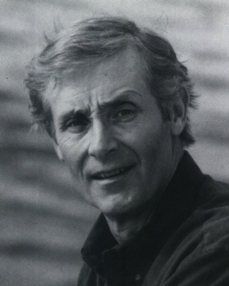
Peter Bradford Benchley was an American author best known for writing the novel Jaws and co-writing the screenplay for its highly successful film adaptation. The success of the book led to many publishers commissioning books about mutant rats, rabid dogs and the like threatening communities. The subsequent film directed by Steven Spielberg and co-written by Benchley is generally acknowledged as the first summer blockbuster. Benchley also wrote The Deep and The Island which were also adapted into films. Benchley was from a literary family. He was the son of author Nathaniel Benchley and grandson of Algonquin Round Table founder Robert Benchley. His younger brother, Nat Benchley, is a writer and actor. Peter Benchley was an alumnus of Phillips Exeter Academy and Harvard University. After graduating from college, he worked for The Washington Post, then as an editor at Newsweek and a speechwriter in the White House. He developed the idea of a man-eating shark terrorising a community after reading of a fisherman Frank Mundus catching a 4,550 pound great white shark off the coast of Long Island in 1964. He also drew some material from the tragic Jersey Shore shark attacks of 1916. His reasonably successful second novel, The Deep, is about a honeymooning couple discovering two sunken treasures on the Bermuda reefs—17th century Spanish gold and a fortune in World War Two-era morphine—who are subsequently targeted by a drug syndicate. This 1976 novel is based on Benchley's chance meeting in Bermuda with diver Teddy Tucker while writing a story for National Geographic. Benchley co-wrote the screenplay for the 1977 film release, along with Tracy Keenan Wynn and an uncredited Tom Mankiewicz. Directed by Peter Yates and starring Robert Shaw, Nick Nolte and Jacqueline Bisset, The Deep was the second-highest grossing release of 1977 after Star Wars, although its box office tally fell well short of Jaws. The Island, published in 1979, was a story of descendants of 17th century pirates who terrorize pleasure craft in the Caribbean, leading to the Bermuda Triangle mystery. Benchley again wrote the screenplay for the film adaptation. But the movie version of The Island, starring Michael Caine and David Warner, failed at the box office when released in 1980. During the 1980s, Benchley wrote three novels that did not sell as well as his previous works. However, Girl of the Sea of Cortez, a beguiling John Steinbeck-type fable about man's complicated relationship with the sea, was far and away his best reviewed book and has attracted a considerable cult following since its publication. Sea of Cortez signposted Benchley's growing interest in ecological issues and anticipated his future role as an impassioned and intelligent defender of the importance of redressing the current imbalance between human activities and the marine environment. Q Clearance published in 1986 was written from his experience as a staffer in the Johnson White House. Rummies (aka Lush), which appeared in 1989, is a semi-autobiographical work, loosely inspired by the Benchley family's history of alcohol abuse. While the first half of the novel is a relatively straightforward (and harrowing) account of a suburbanite's descent into alcoholic hell, the second part—which takes place at a New Mexico substance abuse clinic—veers off into wildly improbable thriller-type territory. He returned to nautical themes in 1991's Beast written about a giant squid threatening Bermuda. Beast was brought to the small screen as a made-for-TV movie in 1996, under the slightly altered title The Beast. His next novel, White Shark, was published in 1994. The story of a Nazi-created genetically engineered shark/human hybrid failed to achieve popular or critical success.