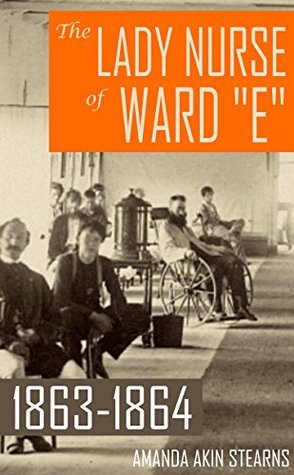
President Abraham Lincoln wanted a complete and comfortable hospital as possible built near the steamboat landing in Washington, D.C. After Armory Square Hospital was constructed, Lincoln kept a constant interest in the care of sick and wounded soldiers. Lincoln often visited Armory Square Hospital and Amanda Akin saw him there as he made the rounds of beds, warmly shaking hands and inquiring about wounds. She also shook Lincoln's hand on more than one occasion in the White House. Another frequent visitor to Armory Square with whom she was less impressed was Walt Whitman. She thought him odd and that his writings on things such as "free love" queer. Nevertheless, she quotes from Whitman in this book, as he had also worked in the hospitals during the war. Front-line letters and diaries of the Civil War bring an immediacy to a long-ago event and connect us to these everyday men and women who lived it. Included in this volume are letters to Akin's sisters and excerpts from her diary. Her great warmth and caring for the boys coming through her ward comes through in her writing and she includes many interesting notes about wartime Washington. For the first time, this long-out-of-print book is available as an affordable, well-formatted book for e-readers and smartphones. Be sure to LOOK INSIDE or download a sample.
Authors

Walter Whitman (1819-1892) was an American poet, essayist, journalist, and humanist. He was a part of the transition between Transcendentalism and realism, incorporating both views in his works. Whitman is among the most influential poets in the American canon, often called the father of free verse. Born on Long Island, Whitman worked as a journalist, a teacher, a government clerk, and a volunteer nurse during the American Civil War in addition to publishing his poetry. Early in his career, he also produced a temperance novel, Franklin Evans (1842). After working as clerk, teacher, journalist and laborer, Whitman wrote his masterpiece, Leaves of Grass, pioneering free verse poetry in a humanistic celebration of humanity, in 1855. Emerson, whom Whitman revered, said of Leaves of Grass that it held "incomparable things incomparably said." During the Civil War, Whitman worked as an army nurse, later writing Drum Taps (1865) and Memoranda During the War (1867). His health compromised by the experience, he was given work at the Treasury Department in Washington, D.C. After a stroke in 1873, which left him partially paralyzed, Whitman lived his next 20 years with his brother, writing mainly prose, such as Democratic Vistas (1870). Leaves of Grass was published in nine editions, with Whitman elaborating on it in each successive edition. In 1881, the book had the compliment of being banned by the commonwealth of Massachusetts on charges of immorality. A good friend of Robert Ingersoll, Whitman was at most a Deist who scorned religion. D. 1892. More: http://www.whitmanarchive.org/ http://philosopedia.org/index.php/Wal... http://www.poets.org/poet.php/prmPID/126 http://www.poetryfoundation.org/bio/w... http://en.wikipedia.org/wiki/Walt\_Whi... http://www.poemhunter.com/walt-whitman/