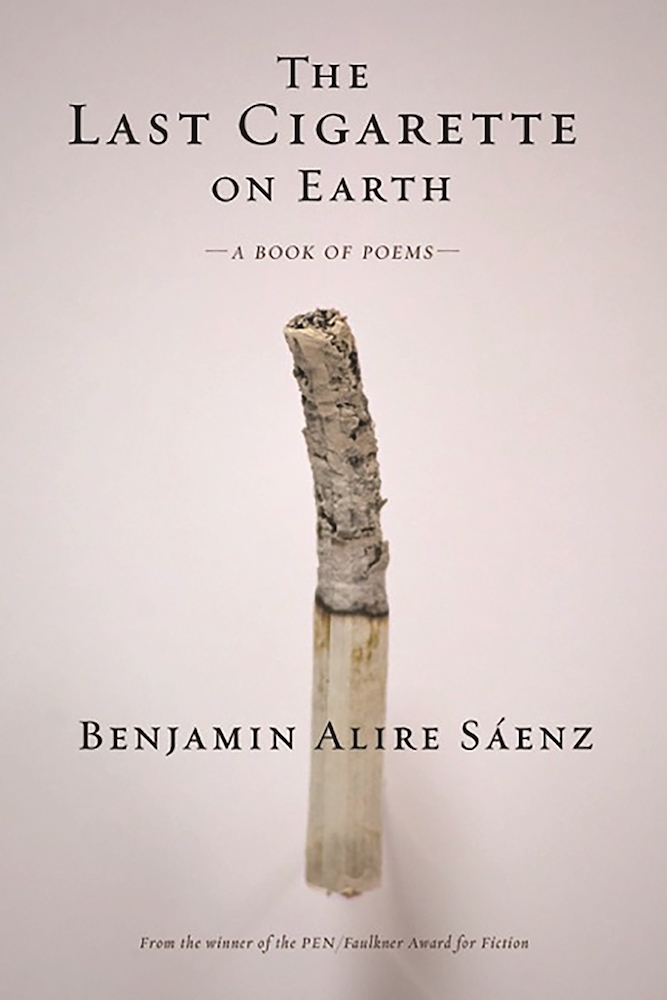
A major Latino writer’s intimate but healing journey through addiction, human desire and broken love. From "He Leaves a Message in the Middle of the Night" He loved beer and crack. He loved heroin, ecstasy, the sad music of the bars. He said he loved you too. You are thinking of the night you met him. Late October night, the breeze as soft as his black eyes. He was so hungry for trouble. You were so hungry for anything that resembled love. Your finger tracing the tattoos on his chest, you dreamed of living in the prison of his arms. But you refused to live in the prison of his deadly nights. You can’t survive without the morning light. You repeat this again and again: He’s a man, not an illness. Tattoos and prison. Novels and poems. A bird can love a fish but they can’t live in your apartment. He called again last night and left a message that was meant to wound. He said: I want to know what you meant when you said I love you. You said: I love you. I meant I love you. He said: I want to know what you meant when you said goodbye. You said: Goodbye. I meant goodbye. You whispered his name in the dark. Benjamin Alire Sáenz in 2013 won the Pen/Faulkner Award and the Lambda Award for his book Everything Begins and Ends at the Kentucky Club. His young adult novel Dante and Aristotle in Paradise was a 2013 Printz Honoree. He lives in El Paso, Texas.
Author
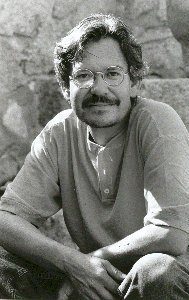
Benjamin Alire Sáenz (born 16 August 1954) is an award-winning American poet, novelist and writer of children's books. He was born at Old Picacho, New Mexico, the fourth of seven children, and was raised on a small farm near Mesilla, New Mexico. He graduated from Las Cruces High School in 1972. That fall, he entered St. Thomas Seminary in Denver, Colorado where he received a B.A. degree in Humanities and Philosophy in 1977. He studied Theology at the University of Louvain in Leuven, Belgium from 1977 to 1981. He was a priest for a few years in El Paso, Texas before leaving the order. In 1985, he returned to school, and studied English and Creative Writing at the University of Texas at El Paso where he earned an M.A. degree in Creative Writing. He then spent a year at the University of Iowa as a PhD student in American Literature. A year later, he was awarded a Wallace E. Stegner fellowship. While at Stanford University under the guidance of Denise Levertov, he completed his first book of poems, Calendar of Dust, which won an American Book Award in 1992. He entered the Ph.D. program at Stanford and continued his studies for two more years. Before completing his Ph.D., he moved back to the border and began teaching at the University of Texas at El Paso in the bilingual MFA program. His first novel, Carry Me Like Water was a saga that brought together the Victorian novel and the Latin American tradition of magic realism and received much critical attention. In The Book of What Remains (Copper Canyon Press, 2010), his fifth book of poems, he writes to the core truth of life's ever-shifting memories. Set along the Mexican border, the contrast between the desert's austere beauty and the brutality of border politics mirrors humanity's capacity for both generosity and cruelty. In 2005, he curated a show of photographs by Julian Cardona. He continues to teach in the Creative Writing Department at the University of Texas at El Paso.