


Margins
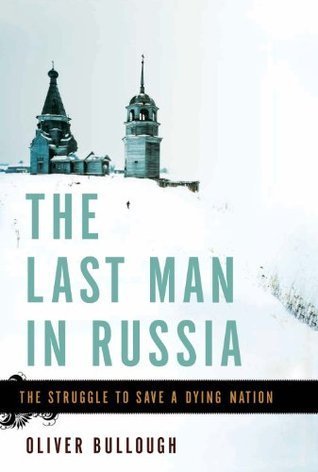
The Last Man in Russia book cover
The Last Man in Russia
The Struggle to Save a Dying Nation
2013
First Published
3.85
Average Rating
298
Number of Pages

Russia is dying from within. Oligarchs and oil barons may still dominate international news coverage, but their prosperity masks a deep-rooted demographic tragedy. Faced with staggering population decline—and near-certain economic collapse—driven by toxic levels of alcohol abuse, Russia is also battling a deeper a spiritual one, born out of the country’s long totalitarian experiment. In The Last Man in Russia, award-winning journalist Oliver Bullough uses the tale of a lone priest to give life to this national crisis. Father Dmitry Dudko, a dissident Orthodox Christian, was thrown into a Stalinist labor camp for writing poetry. Undaunted, on his release in the mid-1950s he began to preach to congregations across Russia with little concern for his own safety. At a time when the Soviet government denied its subjects the prospect of advancement, and turned friend against friend and brother against brother, Dudko urged his followers to cling to hope. He maintained a circle of sacred trust at the heart of one of history’s most deceitful systems. But as Bullough reveals, this courageous group of believers was eventually shattered by a terrible act of betrayal—one that exposes the full extent of the Communist tragedy. Still, Dudko’s dream endures. Although most Russians have forgotten the man himself, the embers of hope that survived the darkness are once more beginning to burn. Leading readers from a churchyard in Moscow to the snow-blanketed ghost towns of rural Russia, and from the forgotten graves of Stalin’s victims to a rock festival in an old gulag camp, The Last Man in Russia is at once a travelogue, a sociological study, a biography, and a cri de coeur for a dying nation—one that, Bullough shows, might yet be saved.
Avg Rating
3.85
Number of Ratings
516
5 STARS
24%
4 STARS
46%
3 STARS
23%
2 STARS
5%
1 STARS
2%
goodreads

Author

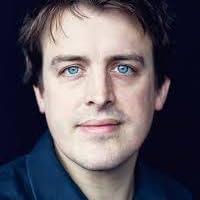
Oliver Bullough
Oliver Bullough
Author · 5 books

I moved to Russia in 1999, after growing up in mid-Wales and studying at Oxford University. I had no particular plan, beyond a desire to learn Russian, but got a job at a local magazine and realised I liked finding things out and writing about them. The next year I moved to Bishkek, Kyrgyzstan, then joined Reuters news agency, which sent me to Moscow. The first major story I reported on was the Moscow theatre siege of 2002, when a group of Chechens seized a theatre in the capital. It both horrified and fascinated me, and I resolved to find out as much as I could about Chechnya and the North Caucasus, to try to understand the roots of the conflict that had burst so unexpectedly into my life. I travelled extensively in the mountains that form Russia’s southern border, falling in love with the scenery, the food and above all the warm and welcoming people. When I left Russia in 2006, I was exhausted by it, however. I had seen too much misery and never wanted to write about Chechnya again. But I had promised to give a talk to a society in London. After the talk, I was asked if I would ever write a book about what I had seen. I wrote down a few thoughts, took them to a friend who knew about books, and she introduced me to a publisher. I travelled in a dozen countries to meet all the people I needed for the stories I wanted to tell, and wrote them down in Let Our Fame Be Great. Penguin published it in the UK in 2010. It won the Oxfam Emerging Writer Prize and was short-listed for the Orwell Prize, with prize judge James Naughtie calling it “an extraordinary book... a wonderful part-travelogue, part-history”. Basic Books published it in the United States, where the Overseas Press Club awarded it the Cornelius Ryan Award for “best nonfiction book on international affairs”. After it came out, though, a number of Russian friends objected that I had made the Russians into the villains. I don’t think I did, but their complaints chewed away at me a little. Perhaps some readers had been left feeling all Russians were complicit in the crimes of their leaders. The Russians after all suffered as much as anyone at the hands of the government in Moscow. That provoked me into writing my second book, The Last Man in Russia, which describes the struggle of a Russian to live in freedom and the efforts of Soviet officials to stop him. The life story of Father Dmitry, the Orthodox priest I chose as my central figure, seems to me to mirror the life of his whole nation, which is beset by depression and alcoholism. Travelling to meet the people I wanted to talk to and to see the places I wanted to describe took me to the far north of Russia, to rotting gulag towns; to the west of Russia, to half-abandoned villages; and to the Ural Mountains, where the communists locked up their doughtiest opponents; and to Moscow itself, that great fat spider in the centre of its web. I would like to write more books one day but, at the moment, I’m concentrating on my day job as Caucasus Editor for the Institute of War and Peace Reporting. I also write freelance articles and worry about the Welsh rugby team. http://www.oliverbullough.com/biograp...

548 Market St PMB 65688, San Francisco California 94104-5401 USA
© 2026 Paratext Inc. All rights reserved