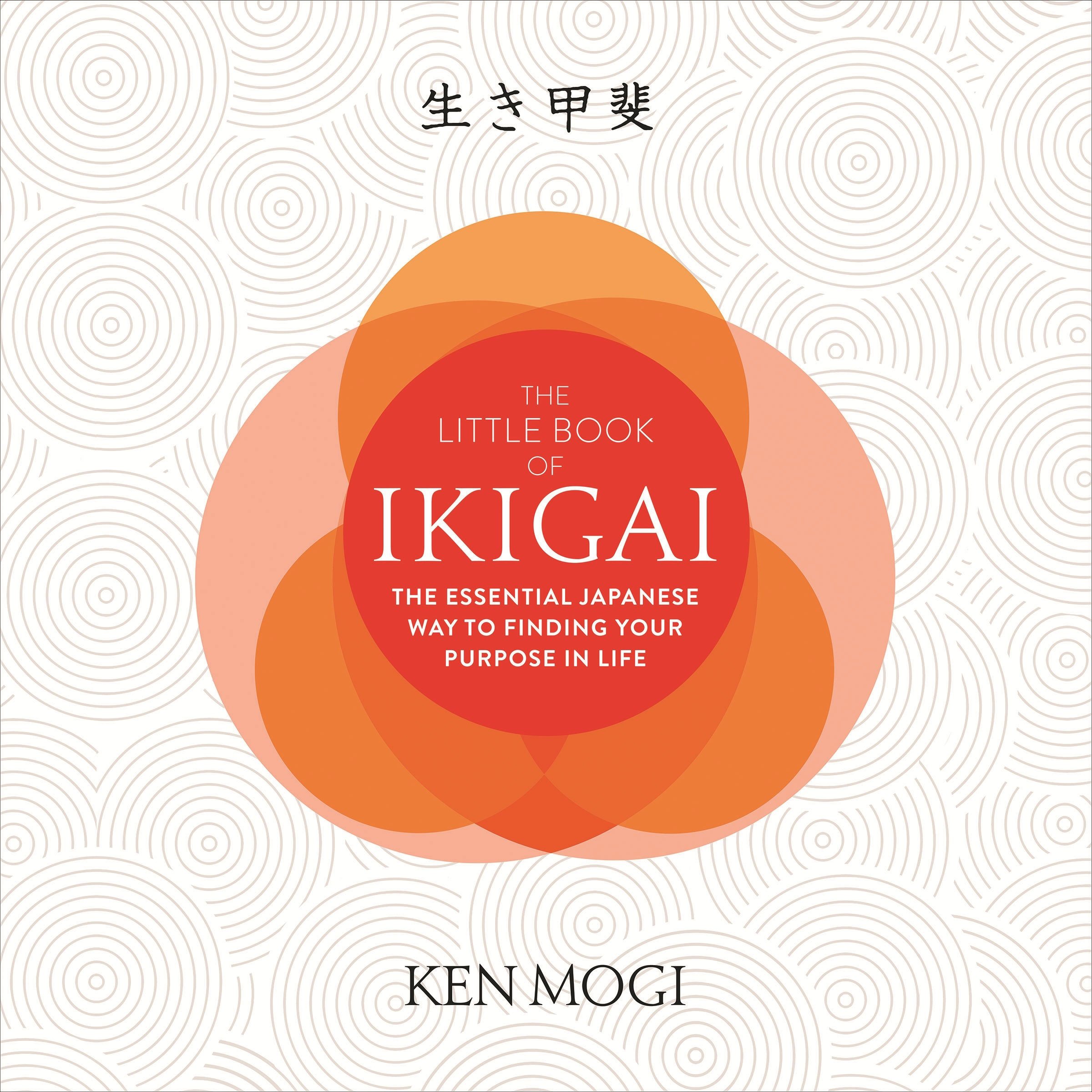
Find out how to live a long and happy life thanks to the ikigai miracle. Japanese men's longevity ranks 4th in the world, while Japanese women's ranks 2nd. Perhaps this comes as no surprise when you know that the Japanese understanding of ikigai is embedded in daily life, careers, relationships, and hobbies. Neuroscientist and bestselling Japanese writer Ken Mogi shares personal insight and scientific research to provide a colourful narrative of Japanese culture and history along the way. He identifies five key pillars to 1: Starting small 2: Releasing yourself 3: Harmony and sustainability 4: The joy of little things 5:Being in the here and now Find fulfilment, joy and mindfulness in everything you do with the ikigai way.
Author

Associated Names: * 茂木 健一郎 (Japanese) * Ken Mogi (English) * โมงิ เคนอิจิโร่ (Thai) Kenichirō "Ken" Mogi (茂木 健一郎 Mogi Kenichirō) is a Japanese scientist. He is a senior researcher at Sony Computer Science Laboratories and a visiting professor at the Tokyo Institute of Technology. According to the profile posted at his personal blog, his mission is "to solve the so-called mind-brain problem." After graduating from the University of Tokyo in 1985 with a degree in science and in 1987 with a degree in law, Mogi received in 1992 a Ph.D. with the thesis "Mathematical Model of Muscle Contraction". Ken Mogi was Japan's first TED speaker. He presented in 2012 March. Mogi has published over 50 books, most of which are written in Japanese. They cover not only brain science but also includes, but not limited to, philosophy, history, art, education, and linguistics. His books have been frequently used as a source of university entrance examinations. His book "Nō to Kasō" (脳と仮想, "Brain and Imagination") has received 2005 Hideo Kobayashi award, and another book "Ima Koko kara Subete no Basho e" (今ここからすべての場所へ, "From Here, to Everywhere") has received 2008 Takeo Kuwabara academic award.