


When we consider Dickens' life and work, in comparison with that of the two great poets we have been studying, the contrast is startling. While Tennyson and Browning were being educated for the life of literature, and shielded most tenderly from the hardships of the world, Dickens, a poor, obscure, and suffering child, was helping to support a shiftless family by pasting labels on blacking bottles, sleeping under a counter like a homeless cat, and once a week timidly approaching the big prison where his father was confined for debt. In 1836 his Pickwick was published, and life was changed as if a magician had waved his wand over him. While the two great poets were slowly struggling for recognition, Dickens, with plenty of money and too much fame, was the acknowledged literary hero of England, the idol of immense audiences which gathered to applaud him wherever he appeared. And there is also this striking contrast between the novelist and the poets, —that while the whole tendency of the age was toward realism, away from the extremes of the romanticists and from the oddities and absurdities of the early novel writers, it was precisely by emphasizing oddities and absurdities, by making caricatures rather than characters, that Dickens first achieved his popularity Runtime: 16 hours, 17 minutes.
Authors

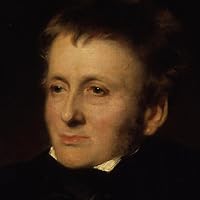
Thomas de Quincey was an English author and intellectual, best known for his Confessions of an English Opium-Eater (1821). See also http://en.wikipedia.org/wiki/Thomas\_d...

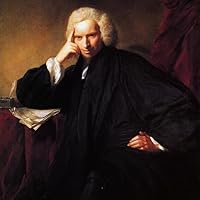
Laurence Sterne was an Irish-born English novelist and an Anglican clergyman. He is best known for his novels The Life and Opinions of Tristram Shandy, Gentleman, and A Sentimental Journey Through France and Italy; but he also published many sermons, wrote memoirs, and was involved in local politics. Sterne died in London after years of fighting consumption (tuberculosis). See also http://en.wikipedia.org/wiki/Laurence...

William Makepeace Thackeray was an English novelist, satirist, and journalist, best known for his keen social commentary and his novel Vanity Fair (1847–1848). His works often explored themes of ambition, hypocrisy, and the moral failings of British society, making him one of the most significant literary figures of the Victorian era. Born in Calcutta, British India, he was sent to England for his education after his father’s death. He attended Charterhouse School, where he developed a distaste for the rigid school system, and later enrolled at Trinity College, Cambridge. However, he left without earning a degree, instead traveling in Europe and pursuing artistic ambitions. After losing much of his inheritance due to bad investments, Thackeray turned to writing for a living. He contributed satirical sketches, essays, and stories to periodicals such as Fraser’s Magazine and Punch, gradually building a reputation for his sharp wit and keen observational skills. His breakthrough came with Vanity Fair, a panoramic satire of English society that introduced the enduring character of Becky Sharp, a resourceful and amoral social climber. Thackeray’s later novels, including Pendennis (1848–1850), The History of Henry Esmond (1852), and The Newcomes (1853–1855), continued to explore the lives of the English upper and middle classes, often focusing on the contrast between personal virtue and social ambition. His historical novel Henry Esmond was particularly praised for its detailed 18th-century setting and complex characterization. In addition to his fiction, Thackeray was a noted public speaker and essayist, delivering lectures on the English humorists of the 18th century and on The Four Georges, a critical look at the British monarchy. Despite his literary success, he lived with personal struggles, including the mental illness of his wife, Isabella, which deeply affected him. He remained devoted to his two daughters and was known for his kindness and generosity among his friends and colleagues. His works remain widely read, appreciated for their incisive humor, rich characterizations, and unflinching critique of social pretensions.

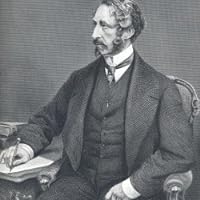
Edward George Earle Lytton Bulwer-Lytton, 1st Baron Lytton PC, was an English novelist, poet, playwright, and politician. Lord Lytton was a florid, popular writer of his day, who coined such phrases as "the great unwashed", "pursuit of the almighty dollar", "the pen is mightier than the sword", and the infamous incipit "It was a dark and stormy night." He was the youngest son of General William Earle Bulwer of Heydon Hall and Wood Dalling, Norfolk and Elizabeth Barbara Lytton, daughter of Richard Warburton Lytton of Knebworth, Hertfordshire. He had two brothers, William Earle Lytton Bulwer (1799–1877) and Henry, afterwards Lord Dalling and Bulwer. Lord Lytton's original surname was Bulwer, the names 'Earle' and 'Lytton' were middle names. On 20 February 1844 he assumed the name and arms of Lytton by royal licence and his surname then became 'Bulwer-Lytton'. His widowed mother had done the same in 1811. His brothers were always simply surnamed 'Bulwer'.

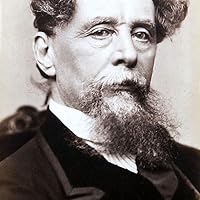
Charles John Huffam Dickens (1812-1870) was a writer and social critic who created some of the world's best-known fictional characters and is regarded as the greatest novelist of the Victorian era. His works enjoyed unprecedented popularity during his lifetime, and by the twentieth century critics and scholars had recognised him as a literary genius. His novels and short stories enjoy lasting popularity. Dickens left school to work in a factory when his father was incarcerated in a debtors' prison. Despite his lack of formal education, he edited a weekly journal for 20 years, wrote 15 novels, five novellas, hundreds of short stories and non-fiction articles, lectured and performed extensively, was an indefatigable letter writer, and campaigned vigorously for children's rights, education, and other social reforms. Dickens was regarded as the literary colossus of his age. His 1843 novella, A Christmas Carol, remains popular and continues to inspire adaptations in every artistic genre. Oliver Twist and Great Expectations are also frequently adapted, and, like many of his novels, evoke images of early Victorian London. His 1859 novel, A Tale of Two Cities, set in London and Paris, is his best-known work of historical fiction. Dickens' creative genius has been praised by fellow writers—from Leo Tolstoy to George Orwell and G. K. Chesterton—for its realism, comedy, prose style, unique characterisations, and social criticism. On the other hand, Oscar Wilde, Henry James, and Virginia Woolf complained of a lack of psychological depth, loose writing, and a vein of saccharine sentimentalism. The term Dickensian is used to describe something that is reminiscent of Dickens and his writings, such as poor social conditions or comically repulsive characters. On 8 June 1870, Dickens suffered another stroke at his home after a full day's work on Edwin Drood. He never regained consciousness, and the next day he died at Gad's Hill Place. Contrary to his wish to be buried at Rochester Cathedral "in an inexpensive, unostentatious, and strictly private manner," he was laid to rest in the Poets' Corner of Westminster Abbey. A printed epitaph circulated at the time of the funeral reads: "To the Memory of Charles Dickens (England's most popular author) who died at his residence, Higham, near Rochester, Kent, 9 June 1870, aged 58 years. He was a sympathiser with the poor, the suffering, and the oppressed; and by his death, one of England's greatest writers is lost to the world." His last words were: "On the ground", in response to his sister-in-law Georgina's request that he lie down. (from Wikipedia)