Margins




548 Market St PMB 65688, San Francisco California 94104-5401 USA
© 2026 Paratext Inc. All rights reserved
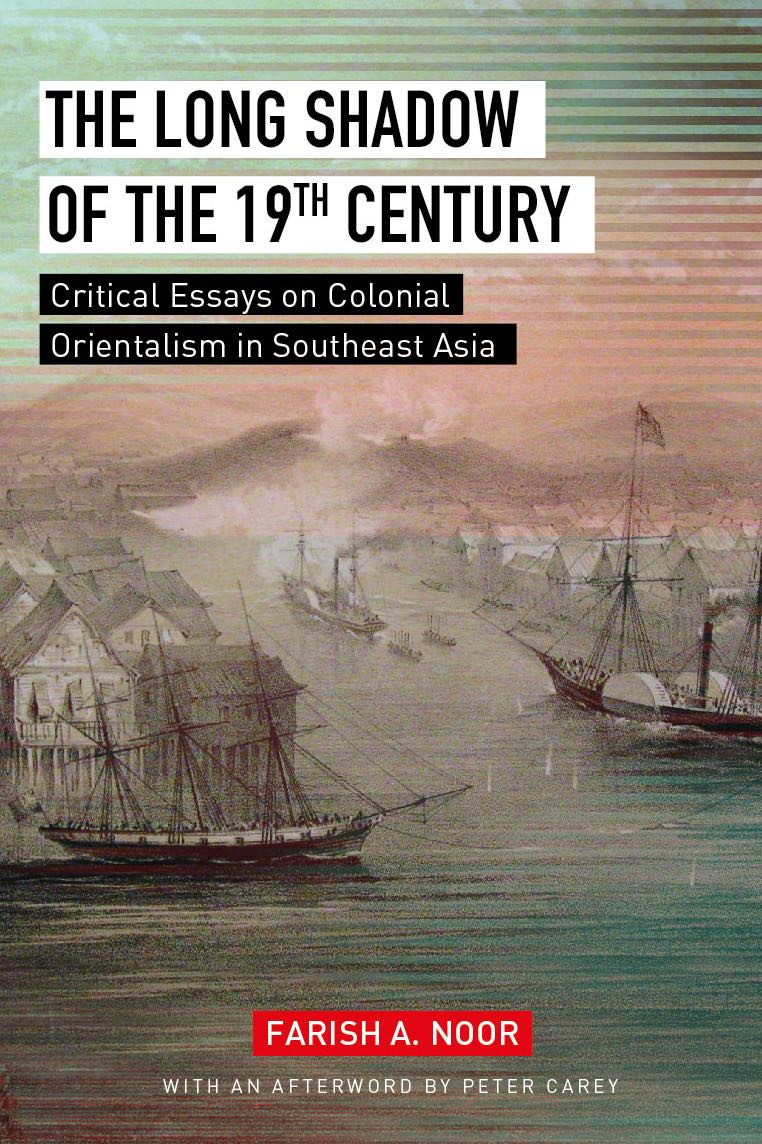
The Long Shadow of the 19th Century: Critical Essays on Colonial Orientalism in Southeast Asia is a critique of colonialism’s knowledge-power complex which become a legacy of colonials, through the writings of the like of Stamford Raffles, James Brooke, John Crawfurd and Anna Leonowens, and many more of those who came from Europe or the United States to Southeast Asia in the nineteenth century—and then wrote about what they saw. Their writings deserve to be read now for what they truly were: Not objective accounts of a Southeast Asia frozen in imperial time but rather as culturally myopic and perspectivist works that betray the subject-positions of the authors themselves. Reading them would allow us to write the history of the East-West encounter through critical lenses that demonstrate the workings of power-knowledge in the elaborate war-economy of racialised colonial-capitalism. Over the past three decades, the author has worked and written on the historical development of Southeast Asian politics, parties and social movements; but his primary interest has always been the impact of colonialism in the 19th century and how events and developments that took place during that period have had a lasting impact on the manner in which Southeast Asia was discursively constructed—initially as colonies that bore the imprint of a decidedly Eurocentric sensibility that brought with it a train of tropes, metaphors and stereotypes that framed Southeast Asia and Southeast Asians in terms that were exotic, strange and at times threatening. Related to this critique of the Orientalist framing of Southeast Asia as the constitutive Other to the West has been the accompanying critique of how such Orientalist tropes and imaginings of the Southeast Asian Other remain in circulation until today, in domains such as the tourism campaigns of the respective countries of Southeast Asia to the very vocabularies that are used in the management of society and everyday statecraft between the states of present-day Southeast Asia. Notwithstanding the occasional bout of conscience among the powers-that-be in this part of the world, and the occasional attempt to project an alternative Southeast Asian understanding of political praxis among the elites of the region, the political landscape of present-day Southeast Asia is clearly one that owes its origins to the colonial era, down to the very political borders that divide the states of the region—almost all of which happen to be colonial borders determined by the colonial powers in the capitals of Western Europe, not in Southeast Asia. CONTENTS Introduction The Long Shadow of the 19th Century: Empire 2.0 Today Essay I Innocents Abroad? The Erasure of the Question of Race and Power in Contemporary ‘Feminist’ and ‘Nostalgic’ Travelogues Essay II ‘Pirate’ is What I’m Not: The Trope of the ‘Southeast Asian Pirate’ in the Discourse of Legitimation for European Colonial Adventurism Essay III Nothing Left to Know: Stamford Raffles’ Map of Java and the Epistemology of Empire Essay IV Anti-Imperialism in the 19″ Century: A Contemporary Critique of the British Invasion of Java in 1811 Essay V You Are Under Arrest: Epistemic Arrest and the Endless Reproduction of the Image of the Colonised Native Essay VI The Woman with the Bayonet: America’s 1832 Attack on Kuala Batu and the Debate over the Sumatran Woman as Victim-Combatant Essay VII Don’t Mention the Corpses: The Erasure of Violence in Colonial Writings on Southeast Asia Essay VIII Mea Culpa: Re-reading 19TH Century Colonial-era Works on Southeast Asia as Confessional Texts Afterword by Peter Carey, Emeritus Fellow Trinity College, Oxford, and Visiting Professor Universitas Indonesia