


Margins
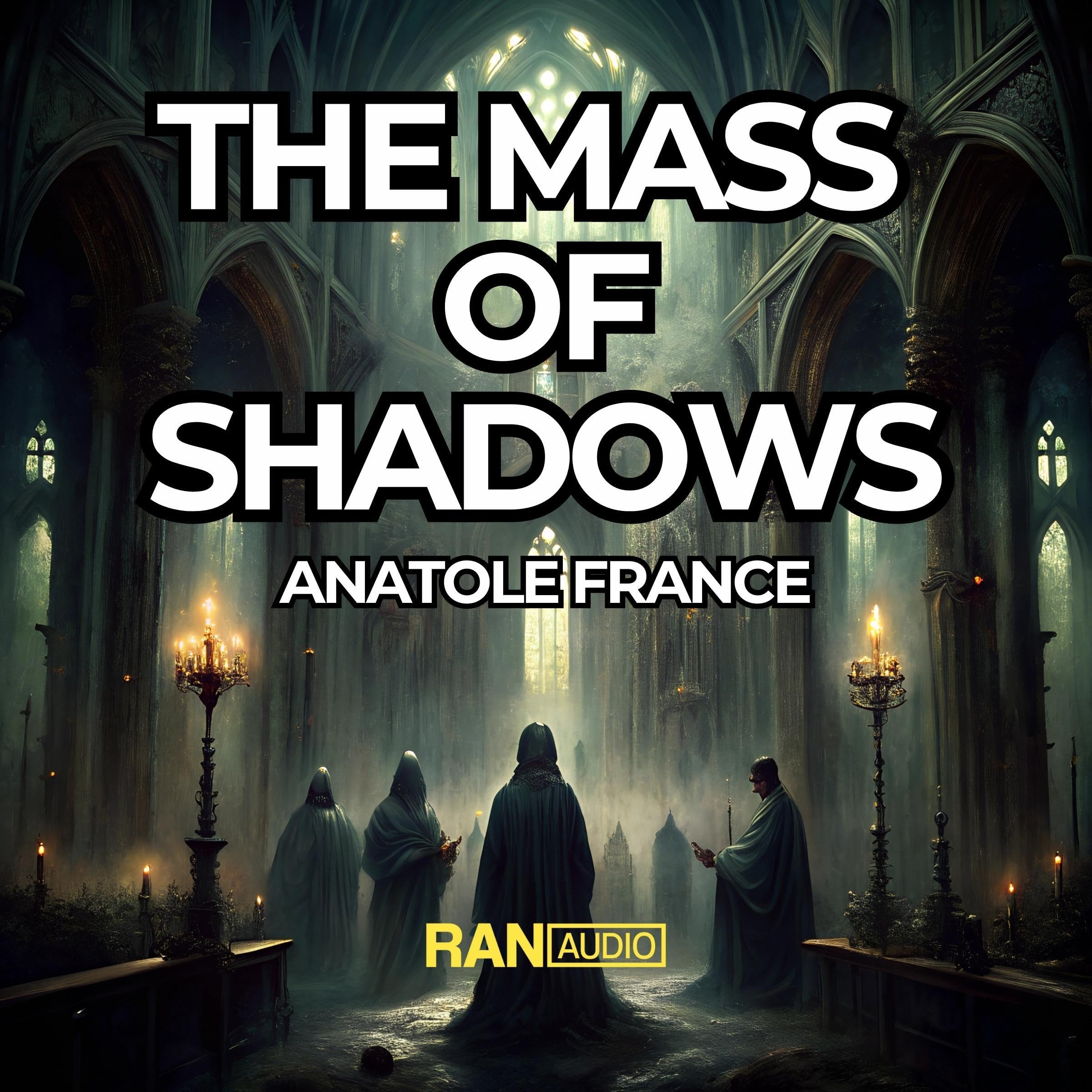
The Mass of Shadows book cover
The Mass of Shadows
2024
First Published
3.16
Average Rating
9
Number of Pages

"On the eve of All Hallows' Day, in a secluded village in the heart of France, the veil between the living and the dead begins to blur. ""The Mass of Shadows"" is a haunting tale that invites you into a world where ancient traditions and spectral apparitions converge in a chilling dance of the macabre. Mademoiselle Jeanne, drawn by curiosity and the allure of mystery, attends a midnight Mass at the village church, said to be haunted by spirits of the departed. As the night unfolds, the air grows thick with a palpable sense of dread, and the shadows of the past emerge to claim their presence among the living. In the dim candlelight, ghostly figures and ethereal whispers fill the sacred space, weaving an eerie tapestry of fear and fascination. As Jeanne witnesses the ethereal procession, she is confronted with the haunting reality of mortality and the power of faith. Anatole France’s ""The Mass of Shadows"" masterfully blends elements of horror and the supernatural, challenging readers to explore the delicate boundary between belief and terror. With lyrical prose and vivid imagery, France crafts a timeless story that lingers long after the final page is turned. Step into a world where the echoes of the past resound and the spirits of the dead walk among us. ""The Mass of Shadows"" is a gripping tale that will captivate your imagination and leave you questioning the mysteries of life and beyond. "
Avg Rating
3.16
Number of Ratings
45
5 STARS
13%
4 STARS
18%
3 STARS
44%
2 STARS
20%
1 STARS
4%
goodreads

Author

Anatole France
Anatole France
Author · 37 books

Awarded the Nobel Prize in Literature in 1921 "in recognition of his brilliant literary achievements, characterized as they are by a nobility of style, a profound human sympathy, grace, and a true Gallic temperament." Anatole France began his career as a poet and a journalist. In 1869, Le Parnasse Contemporain published one of his poems, La Part de Madeleine. In 1875, he sat on the committee which was in charge of the third Parnasse Contemporain compilation. He moved Paul Verlaine and Mallarmé aside of this Parnasse. As a journalist, from 1867, he wrote a lot of articles and notices. He became famous with the novel Le Crime de Sylvestre Bonnard (1881). Its protagonist, skeptical old scholar Sylvester Bonnard, embodied France's own personality. The novel was praised for its elegant prose and won him a prize from the French Academy. In La Rotisserie de la Reine Pedauque (1893) Anatole France ridiculed belief in the occult; and in Les Opinions de Jerome Coignard (1893), France captured the atmosphere of the fin de siècle. He was elected to the Académie française in 1896. France took an important part in the Dreyfus Affair. He signed Emile Zola's manifesto supporting Dreyfus, a Jewish army officer who had been falsely convicted of espionage. France wrote about the affair in his 1901 novel Monsieur Bergeret. France's later works include L'Île des Pingouins (1908) which satirizes human nature by depicting the transformation of penguins into humans - after the animals have been baptized in error by the nearsighted Abbot Mael. La Revolte des Anges (1914) is often considered France's most profound novel. It tells the story of Arcade, the guardian angel of Maurice d'Esparvieu. Arcade falls in love, joins the revolutionary movement of angels, and towards the end realizes that the overthrow of God is meaningless unless "in ourselves and in ourselves alone we attack and destroy Ialdabaoth." He was awarded the Nobel Prize in 1921. He died in 1924 and is buried in the Neuilly-sur-Seine community cemetery near Paris. In 1922, France's entire works were put on the Index Librorum Prohibitorum (Prohibited Books Index) of the Roman Catholic Church.[2:] This Index was abolished in 1966.

548 Market St PMB 65688, San Francisco California 94104-5401 USA
© 2025 Paratext Inc. All rights reserved