1989
First Published
3.81
Average Rating
312
Number of Pages
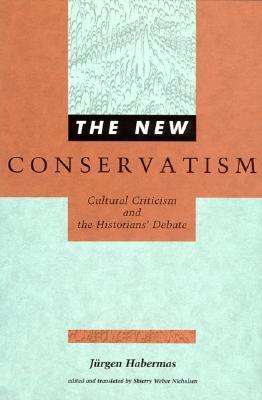
Social theorist Jürgen Habermas reveals yet another facet of his extraordinary talents in these insightful, often passionate political and cultural commentaries on contemporary German life. The central theme uniting the book is the German problem of "coming to terms with the past" - a problem that has important implications outside Germany as well.Topics include the debate over Martin Heidegger's ties to National Socialism, the rise of neoconservatism, and the avenues open to utopianism today. Of particular note are the essays on what has come to be known as the Historians' Habermas' attack on the revisionist German historians who have been trying to trivialize and "normalize" the history of the Nazi period and his defense of the need for a realistic assessment of Germany's past.

Avg Rating
3.81
Number of Ratings
21
5 STARS
24%
4 STARS
33%
3 STARS
43%
2 STARS
0%
1 STARS
0%
goodreads
Author

Jurgen Habermas
Author · 40 books
Jürgen Habermas is a German sociologist and philosopher in the tradition of critical theory and American pragmatism. He is perhaps best known for his work on the concept of the public sphere, the topic of his first book entitled The Structural Transformation of the Public Sphere. His work focuses on the foundations of social theory and epistemology, the analysis of advanced capitalistic societies and democracy, the rule of law in a critical social-evolutionary context, and contemporary politics—particularly German politics. Habermas' theoretical system is devoted to revealing the possibility of reason, emancipation, and rational-critical communication latent in modern institutions and in the human capacity to deliberate and pursue rational interests.