Margins
The Nitrous Books book cover 1
The Nitrous Books book cover 2
The Nitrous Books book cover 3
The Nitrous Books
Series · 3 books · 1985
By Osho

Books in series

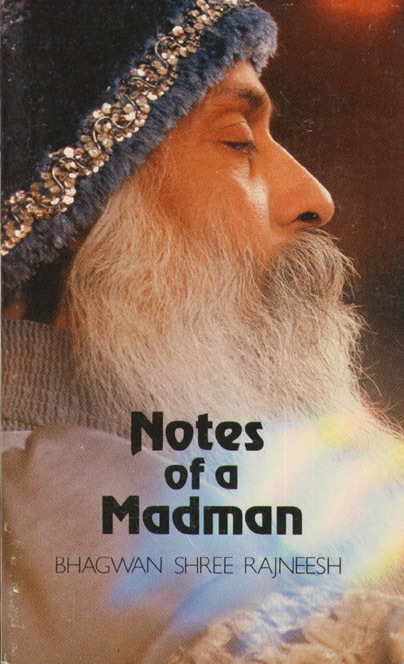
Notes of a Madman book cover
#1

Notes of a Madman

1985

Osho creates a loosely woven tapestry of vivid, humorous and touching impressions and glimpses giving the feeling we are having a personal meeting with the master. In this deep exploration of the Tibetan mantra, Om Mani Padme Hum, he comments on drugs, his love of beauty and danger, relaxation, laughter, the relationship between men and women, and even madness and death. He is just an ordinary human being, like us, he says, but with one exception. His search has ended - he has awakened: "Just to be oneself is true. That is my teaching, just to be yourself; just to be your own purity, without fear, because it will mean different things for different people." A selection of beautiful nature photographs in full color supplements this unforgettable book. About the origin of the title, the notetaker Sw Devageet, in Osho: The First Buddha in the Dental Chair p.142, says: We pondered and brainstormed, making and discarding titles by the score. Our tiny room was littered with paper. Vivek, who had never liked the idea of the notes from the outset, walked out of our room one day muttering, "Nobody's going to read this book. It's just the bloody notes of a madman." Looking at each other, Raj and I quickly wrote her words at the top of our list: Notes of a Madman, as a suggested title for the first volume. Of course Osho chose it.
Books I Have Loved book cover
#2

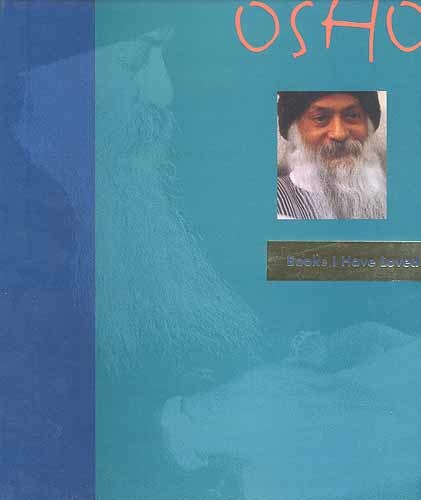
Books I Have Loved

1985

An extraordinary book written under extraordinary circumstances. Osho, the enlightened master who has over 600 books to his name, speaks not in his usual lecture hall to thousands of seekers, but in an intimate and eccentric setting to only four disciples. He tells stories and gives poetic and profound descriptions of books thad helped him "...when nothing else was shining in the darkness." Osho talks about 168 books in all, from the great seers of the Far East and Indian mystics, to Nietzsche and Western philosophers and novelists. Here is a whole rainbow of the world's literary genius, woven together with wonderfully humorous personal comments and swings of the Zen stick from Osho to his notetakers.
Glimpses of a Golden Childhood book cover
#3

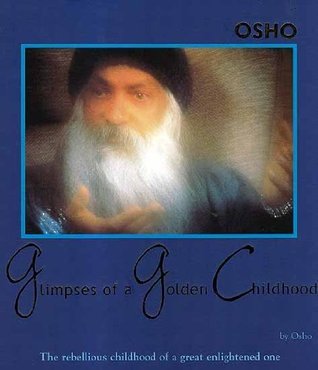
Glimpses of a Golden Childhood

1985

This is a very special volume because rather than responding to questions and sutras, Osho is simply sharing his enlightened consciousness as he recalls his rebellious and mischievous childhood through fascinating, entertaining and inspiring stories. This edition also includes many beautiful, rare, and intimate photos of the ordinary daily activities of an enlightened mystic. "My childhood was certainly golden - not a symbol, absolutely golden; not poetically, but literally, factually." Osho

Author

Osho
Osho
Author · 307 books

Rajneesh (born Chandra Mohan Jain, 11 December 1931 – 19 January 1990) and latter rebranded as Osho was leader of the Rajneesh movement. During his lifetime he was viewed as a controversial new religious movement leader and mystic. In the 1960s he traveled throughout India as a public speaker and was a vocal critic of socialism, Mahatma Gandhi, and Hindu religious orthodoxy. Rajneesh emphasized the importance of meditation, mindfulness, love, celebration, courage, creativity and humor—qualities that he viewed as being suppressed by adherence to static belief systems, religious tradition and socialization. In advocating a more open attitude to human sexuality he caused controversy in India during the late 1960s and became known as "the sex guru". In 1970, Rajneesh spent time in Mumbai initiating followers known as "neo-sannyasins". During this period he expanded his spiritual teachings and commented extensively in discourses on the writings of religious traditions, mystics, and philosophers from around the world. In 1974 Rajneesh relocated to Pune, where an ashram was established and a variety of therapies, incorporating methods first developed by the Human Potential Movement, were offered to a growing Western following. By the late 1970s, the tension between the ruling Janata Party government of Morarji Desai and the movement led to a curbing of the ashram's development and a back taxes claim estimated at $5 million. In 1981, the Rajneesh movement's efforts refocused on activities in the United States and Rajneesh relocated to a facility known as Rajneeshpuram in Wasco County, Oregon. Almost immediately the movement ran into conflict with county residents and the state government, and a succession of legal battles concerning the ashram's construction and continued development curtailed its success. In 1985, in the wake of a series of serious crimes by his followers, including a mass food poisoning attack with Salmonella bacteria and an aborted assassination plot to murder U.S. Attorney Charles H. Turner, Rajneesh alleged that his personal secretary Ma Anand Sheela and her close supporters had been responsible. He was later deported from the United States in accordance with an Alford plea bargain.[ After his deportation, 21 countries denied him entry. He ultimately returned to India and a revived Pune ashram, where he died in 1990. Rajneesh's ashram, now known as OSHO International Meditation Resort and all associated intellectual property, is managed by the Zurich registered Osho International Foundation (formerly Rajneesh International Foundation). Rajneesh's teachings have had a notable impact on Western New Age thought, and their popularity has increased markedly since his death.


548 Market St PMB 65688, San Francisco California 94104-5401 USA
© 2026 Paratext Inc. All rights reserved