Margins
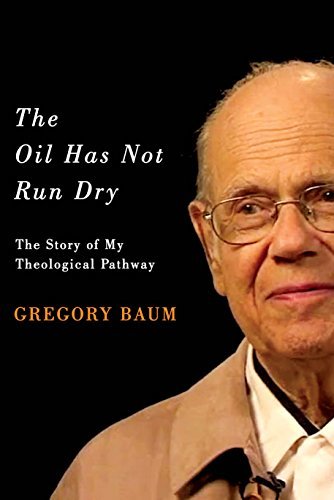
The Oil Has Not Run Dry book cover
The Oil Has Not Run Dry
The Story of My Theological Pathway
2016
First Published
4.25
Average Rating
269
Number of Pages

Part of Series

Born to a Jewish mother and Protestant father in 1923 Berlin, Gregory Baum devoted his career to a humanistic approach to Catholicism. In The Oil Has Not Run Dry, Baum shares recollections about his lifelong commitment to theology, his atypical views, and his evolving understanding of the Catholic Church’s message. Baum reflects on his groundbreaking work with the Second Vatican Council (1962-65) and how it helped to open the Church to a new understanding of outsiders - one that advocated cooperation with world religions in support of peace and justice and respected secular philosophies committed to truth and social solidarity. Later embracing Latin American liberation theology, he became a leading thinker of the Catholic Left in Canada, adopting radical positions that initially earned support from Canadian bishops in the 1970s. Diverging from official Catholic doctrines regarding women and sexual ethics, Baum eventually left the priesthood, but continued to teach theology and remained active in the Church. The Oil Has Not Run Dry also discusses the contrast between Catholicism in Quebec and English-speaking North America, and the ways in which Baum sees Quebec's culture as more marked by social solidarity. This significant difference has inspired his own writings, which present the original development of Catholic thought in Quebec to an English-speaking readership.

Avg Rating
4.25
Number of Ratings
8
5 STARS
50%
4 STARS
25%
3 STARS
25%
2 STARS
0%
1 STARS
0%
goodreads

Author

Gregory Baum
Author · 3 books

Gerhard Albert Baum (1923–2017), better known as Gregory Baum, was a German-born Canadian priest and theologian in the Roman Catholic Church. He became known in North America and Europe in the 1960s for his work on ecumenism, interfaith dialogue, and the relationship between the Catholic Church and Jews. In the later 1960s, he went to the New School for Social Theory in New York and became a sociologist, which led to his work on creating a dialogue between classical sociology (Marx, Tocqueville, Durkheim, Toennies, Weber, etc.) and Christian theology. In the 1970s, he welcomed the insights of the Theology of Liberation that came from Latin America and other societies. He also became interested in the work of Karl Mannheim and developed a program of ideology critique that he hoped would eliminate the ideological elements in religion, especially those elements that preached contempt for others and allowed Christians to remain unmoved by the suffering of the victims of social injustice and structural violence. In the 1980s and 1990s, Baum continued his study into ideology critique by integrating the work of the Frankfurt School of Critical Theory. He connected the Frankfurt School's concept of "the end of innocent critique" with the Catholic Church's "preferential option for the poor". Both concepts extended his interest in ideology critique. Since Baum has always been interested in social ethics, he also studied the work of Karl Polanyi, with whom he sympathized greatly.

548 Market St PMB 65688, San Francisco California 94104-5401 USA
© 2026 Paratext Inc. All rights reserved