Margins
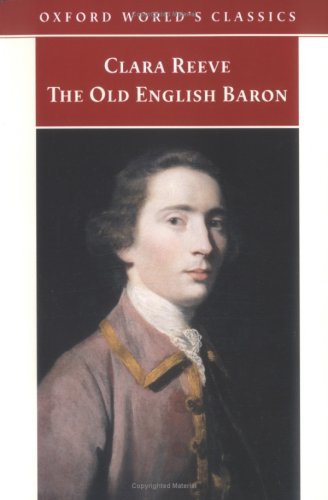
The Old English Baron book cover
The Old English Baron
1777
First Published
3.02
Average Rating
196
Number of Pages
When Sir Philip Harclay returns to England after a long absence, he finds that his childhood friend, Arthur, Lord Lovel, is no longer alive, and that the castle and estates of the Lovel family have twice changed hands. But a mysteriously abandoned set of rooms in the castle of Lovel promises to disclose the secrets of the past. After a series of frantic episodes and surprising revelations, culminating in a trial by combat, the crimes of the usurper and the legitimacy of the true heir are finally discovered.

Avg Rating
3.02
Number of Ratings
927
5 STARS
12%
4 STARS
18%
3 STARS
39%
2 STARS
24%
1 STARS
8%
goodreads

Author

Clara Reeve
Clara Reeve
Author · 3 books

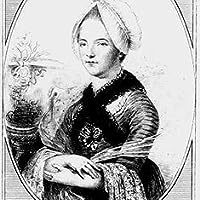
Reeve was born in Ipswich, England, one of the eight children of Reverend Willian Reeve, M.A., Rector of Freston and of Kreson in Suffolk, and perpetual curate of St Nicholas. Her mother's maiden name was Smithies, daughter of a Smithies, a goldsmith and jeweller to King George I. In a letter to one of her friends Reeve said the following of her father and her early life: My father was an old Whig; from him I have learned all that I know; he was my oracle; he used to make me read the Parliamentary debates, while he smoked his pipe after supper. I gaped and yawned over them at the time, but, unawares to myself, they fixed my principles once and for all. He made me read Rapin's History of England; the information it gave made amends for its dryness. I read Cato's Letters by Trenchard and Gordon; I read the Greek and Roman histories, and Plutarch's Lives: all these at an age when few people of either sex can read their names. After the death of her father, she lived with her mother and sisters in Colchester. It was here that she first became an author, publishing a translation of a work by Barclay under the title of The Phoenix (1772). She was the author of several novels, of which only one is remembered: The Champion of Virtue, later known as The Old English Baron (1777), written in imitation of, or rivalry with, the Castle of Otranto by Horace Walpole, 4th Earl of Orford, with which it has often been printed. The first edition under the title of The Old English Baron was dedicated to the daughter of Samuel Richardson, who is said to have helped Reeve revise and correct the novel. Her novel noticeably influenced Mary Shelley's Frankenstein. She also wrote the epistolatory novel The School for Widows (1791). Her innovative history of prose fiction, The Progress of Romance (1785), can be regarded generally as a precursor to modern histories of the novel and specifically as upholding the tradition of female literary history heralded by Elizabeth Rowe (1674–1737) and Susannah Dobson, d. 1795. One of the stories in this work, "The History of Charoba, Queen of Egypt", was the inspiration for Walter Savage Landor's first major work Gebir. Reeve led a retired life, leaving very little biographical material. She died at Ipswitch, and was buried by her own direction in the churchyard of St. Stephens, next to her friend the Reverend Derby.

548 Market St PMB 65688, San Francisco California 94104-5401 USA
© 2026 Paratext Inc. All rights reserved