


Margins
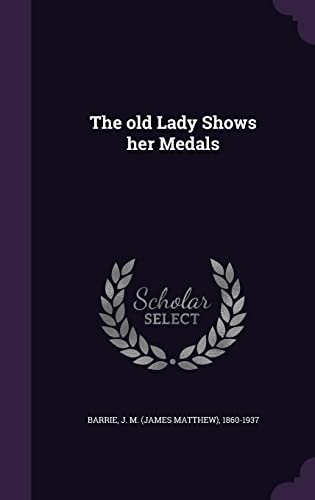
The Old Lady Shows Her Medals book cover
The Old Lady Shows Her Medals
1931
First Published
3.92
Average Rating
131
Number of Pages

This work has been selected by scholars as being culturally important, and is part of the knowledge base of civilization as we know it. This work was reproduced from the original artifact, and remains as true to the original work as possible. Therefore, you will see the original copyright references, library stamps (as most of these works have been housed in our most important libraries around the world), and other notations in the work. This work is in the public domain in the United States of America, and possibly other nations. Within the United States, you may freely copy and distribute this work, as no entity (individual or corporate) has a copyright on the body of the work. As a reproduction of a historical artifact, this work may contain missing or blurred pages, poor pictures, errant marks, etc. Scholars believe, and we concur, that this work is important enough to be preserved, reproduced, and made generally available to the public. We appreciate your support of the preservation process, and thank you for being an important part of keeping this knowledge alive and relevant.
Avg Rating
3.92
Number of Ratings
12
5 STARS
25%
4 STARS
42%
3 STARS
33%
2 STARS
0%
1 STARS
0%
goodreads

Author

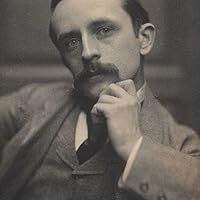
J.M. Barrie
J.M. Barrie
Author · 66 books

Sir James Matthew Barrie, 1st Baronet, OM was a Scottish author and dramatist, best remembered today as the creator of Peter Pan. The son of a weaver, Barrie studied at the University of Edinburgh. He took up journalism, worked for a Nottingham newspaper, and contributed to various London journals before moving to London in 1885. His early works, Auld Licht Idylls (1889) and A Window in Thrums (1889), contain fictional sketches of Scottish life and are commonly seen as representative of the Kailyard school. The publication of The Little Minister (1891) established his reputation as a novelist. During the next 10 years Barrie continued writing novels, but gradually his interest turned toward the theatre. In London he met the Llewelyn Davies boys who inspired him in writing about a baby boy who has magical adventures in Kensington Gardens (included in The Little White Bird), then to write Peter Pan, or The Boy Who Wouldn't Grow Up, a "fairy play" about this ageless boy and an ordinary girl named Wendy who have adventures in the fantasy setting of Neverland. This play quickly overshadowed his previous work and although he continued to write successfully, it became his best-known work, credited with popularising the name Wendy, which was very uncommon previously. Barrie unofficially adopted the Davies boys following the deaths of their parents. Before his death, he gave the rights to the Peter Pan works to Great Ormond Street Hospital, which continues to benefit from them.

548 Market St PMB 65688, San Francisco California 94104-5401 USA
© 2025 Paratext Inc. All rights reserved