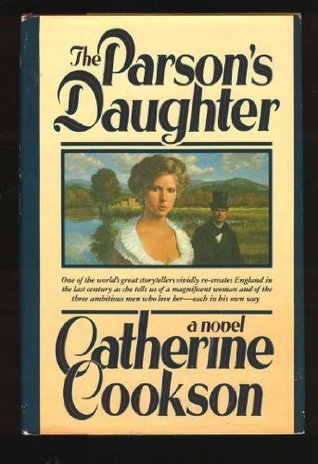
The Victorian Sabbath was not without its difficulties for some of those committed to its observance. Such a one was Nancy Ann Hazel, the young and high-spirited daughter of a country parson. He was a good man and she loved him dearly, but his Sunday sermons could seem long indeed when beyond the church door the sunshine beckoned her into the fields of this pleasant corner of County Durham. Two older brothers had taught Nancy Ann how to look after herself, so that she could, when necessary, hold her own with the roughest of the village children, eventhough such escapades might not be considered altogether fitting in a daughter of the vicarage; but they foreshadowed the courage and fortitude she would soon enough have to muster when the greater challenges of a controversial marriage thrust her into womanhood, and when conflict and tragedy alike had to be faced and overcome. THE PARSON'S DAUGHTER is a major novel spanning the last quarter of the nineteenth century and introduces one of Catherine Cookson's most memorable heroines. Its strong and vibrant narrative will captivate this great storyteller's readers throughout the world.
Author

Catherine Cookson was born in Tyne Dock, the illegitimate daughter of a poverty-stricken woman, Kate, who Catherine believed was her older sister. Catherine began work in service but eventually moved south to Hastings, where she met and married Tom Cookson, a local grammar-school master. Although she was originally acclaimed as a regional writer - her novel The Round Tower won the Winifred Holtby Award for the best regional novel of 1968 - her readership quickly spread throughout the world, and her many best-selling novels established her as one of the most popular contemporary woman novelist. She received an OBE in 1985, was created a Dame of the British Empire in 1993, and was appointed an Honorary Fellow of St Hilda's College, Oxford, in 1997. For many years she lived near Newcastle upon Tyne.