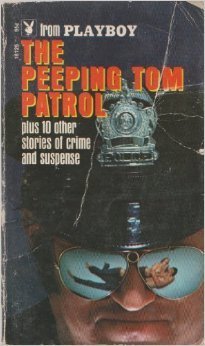



A rookie cop goes out with his partner and discovers a whole new side to the street beat, but grows very uncomfortable very quickly. Originally published in Playboy, September 1958.
Authors


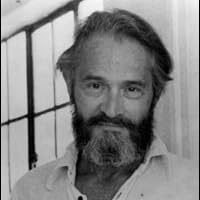
Pietro Di Donato was an italo-american writer and bricklayer. Born in West Hoboken in 1911 from italian immigrant parents from Vasto (Abruzzo). He had little scholar education but had a huge success with his autobiographical novel Christ in concrete published in 1939. The novel was inspired by the tragic death at work of his father, Geremia, on Good Friday's morning of 1923 when Pietro was twelve (it is stated that worker Pascal D'Angelo, later become a writer too witnessed and reported the tragic event to the family). Pietro himself became a bricklayer like his father. Christ in concrete is based on a short story written in 1937 which was later expanded as a novel. The novel was defined "the bible of proletarian literature", and is written with a mixed language of street slang, biblical language, italian dialects and english sentence-costruction. The book, which portrayed the world of New York's Italian-American construction workers during The Great Depression, was hailed by critics in the United States and abroad as a metaphor for the immigrant experience in America, and cast Di Donato as one of the most celebrated Italian American novelists of the mid-20th century. The great success of the novel lead to a film adaptation in 1949 directed by Edward Dmytryk by the title Give Us This Day. He also worked as a journalist and became a political activist. He published, This Woman (1958) and Three Circles of Light (1960), respectively the sequel and the prequel of his first novel. He also wrote the biographies of Francesca Saverio Gabrini, the first american saint (Immigrant Saint) and Maria Goretti, an italian girl murdered in 1902 and later canonized. In 1978 his journalistic report about the mysterious kidnapping and murder of italian politician Aldo Moro (titled Christ in Plastic) published in Penthouse magazine won the Overseas Press Club Prize. The article was later adapted into a play entitled Moro. Di Donato died on January 19, 1992 in Stony Brook, Long Island, with his last novel, American Gospels, still unpublished.

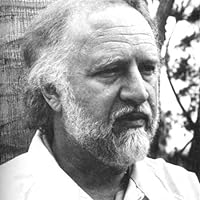
Born in Allendale, New Jersey to Norwegian immigrant parents, Matheson was raised in Brooklyn and graduated from Brooklyn Technical High School in 1943. He then entered the military and spent World War II as an infantry soldier. In 1949 he earned his bachelor's degree in journalism from the University of Missouri and moved to California in 1951. He married in 1952 and has four children, three of whom (Chris, Richard Christian, and Ali Matheson) are writers of fiction and screenplays. His first short story, "Born of Man and Woman," appeared in the Magazine of Fantasy and Science Fiction in 1950. The tale of a monstrous child chained in its parents' cellar, it was told in the first person as the creature's diary (in poignantly non-idiomatic English) and immediately made Matheson famous. Between 1950 and 1971, Matheson produced dozens of stories, frequently blending elements of the science fiction, horror and fantasy genres. Several of his stories, like "Third from the Sun" (1950), "Deadline" (1959) and "Button, Button" (1970) are simple sketches with twist endings; others, like "Trespass" (1953), "Being" (1954) and "Mute" (1962) explore their characters' dilemmas over twenty or thirty pages. Some tales, such as "The Funeral" (1955) and "The Doll that Does Everything" (1954) incorporate zany satirical humour at the expense of genre clichés, and are written in an hysterically overblown prose very different from Matheson's usual pared-down style. Others, like "The Test" (1954) and "Steel" (1956), portray the moral and physical struggles of ordinary people, rather than the then nearly ubiquitous scientists and superheroes, in situations which are at once futuristic and everyday. Still others, such as "Mad House" (1953), "The Curious Child" (1954) and perhaps most famously, "Duel" (1971) are tales of paranoia, in which the everyday environment of the present day becomes inexplicably alien or threatening. He wrote a number of episodes for the American TV series The Twilight Zone, including "Steel," mentioned above and the famous "Nightmare at 20,000 Feet"; adapted the works of Edgar Allan Poe for Roger Corman and Dennis Wheatley's The Devil Rides Out for Hammer Films; and scripted Steven Spielberg's first feature, the TV movie Duel, from his own short story. He also contributed a number of scripts to the Warner Brothers western series "The Lawman" between 1958 and 1962. In 1973, Matheson earned an Edgar Award from the Mystery Writers of America for his teleplay for The Night Stalker, one of two TV movies written by Matheson that preceded the series Kolchak: The Night Stalker. Matheson also wrote the screenplay for Fanatic (US title: Die! Die! My Darling!) starring Talullah Bankhead and Stefanie Powers. Novels include The Shrinking Man (filmed as The Incredible Shrinking Man, again from Matheson's own screenplay), and a science fiction vampire novel, I Am Legend, which has been filmed three times under the titles The Omega Man and The Last Man on Earth and once under the original title. Other Matheson novels turned into notable films include What Dreams May Come, Stir of Echoes, Bid Time Return (as Somewhere in Time), and Hell House (as The Legend of Hell House) and the aforementioned Duel, the last three adapted and scripted by Matheson himself. Three of his short stories were filmed together as Trilogy of Terror, including "Prey" with its famous Zuni warrior doll. In 1960, Matheson published The Beardless Warriors, a nonfantastic, autobiographical novel about teenage American soldiers in World War II. He died at his home on June 23, 2013, at the age of 87 http://us.macmillan.com/author/richar...

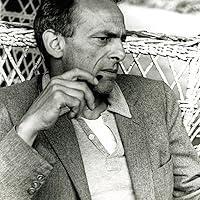
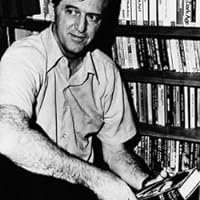
Michael Shaara was an American writer of science fiction, sports fiction, and historical fiction. He was born to Italian immigrant parents (the family name was originally spelled Sciarra, which in Italian is pronounced the same way) in Jersey City, New Jersey, graduated from Rutgers University in 1951, and served as a sergeant in the 82nd Airborne division prior to the Korean War. Before Shaara began selling science fiction stories to fiction magazines in the 1950s, he was an amateur boxer and police officer. He later taught literature at Florida State University while continuing to write fiction. The stress of this and his smoking caused him to have a heart attack at the early age of 36; from which he fully recovered. His novel about the Battle of Gettysburg, The Killer Angels, won the Pulitzer Prize for Fiction in 1975. Shaara died of another heart attack in 1988. Shaara's son, Jeffrey Shaara, is also a popular writer of historical fiction; most notably sequels to his father's best-known novel. His most famous is the prequel to The Killer Angels, Gods and Generals. Jeffrey was the one to finally get Michael's last book, For Love of the Game, published three years after he died. Today there is a Michael Shaara Award for Excellence in Civil War Fiction, established by Jeffrey Shaara, awarded yearly at Gettysburg College.

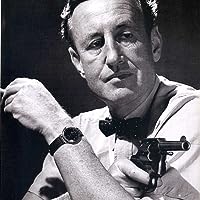
Librarian Note: There is more than one author in the Goodreads database with this name. Ian Lancaster Fleming was a British author, journalist, and commander in the royal Navy during the Second World War. He was a grandson of the Scottish financier Robert Fleming, who founded the Scottish American Investment Trust and the merchant bank Robert Fleming & Co. Fleming is best remembered for creating the character of James Bond and chronicling his adventures in twelve novels and nine short stories. Additionally, Fleming wrote the children's story Chitty Chitty Bang Bang and two non-fiction books.