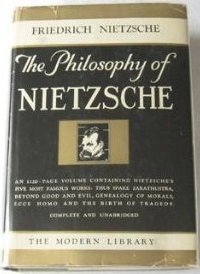
The Philosophy of Nietzsche
Thus Spake Zarathustra; Beyond Good and Evil; The Genealogy of Morals; Ecce Homo; The Birth of Tragedy
2012
First Published
4.00
Average Rating
This 1088-page volume contains the complete and unabridged texts of Nietzsche's five most famous works: Thus Spake Zarathustra, Beyond Good and Evil, Geneology of Morals, Ecce Homo and The Birth of Tragedy. The material included has never before been available in a single volume. It is interesting to note that Ecce Homo and The Birth of Tragedy were translated by Clifton P. Fadiman in 1926, when he was a graduate student at Columbia; this was the first professional literary labor of the now nationally known critic. The introduction is by William Huntington Wright who, in moments of relaxation, wrote detective stories under the pen-name of S.S. Van Dine.

Avg Rating
4.00
Number of Ratings
10
5 STARS
30%
4 STARS
50%
3 STARS
10%
2 STARS
10%
1 STARS
0%
goodreads
Author

Friedrich Nietzsche
Author · 110 books
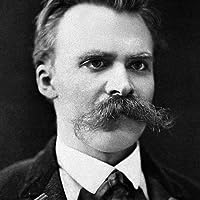
Friedrich Wilhelm Nietzsche (Ph.D., Philology, Leipzig University, 1869) was a German philosopher of the late 19th century who challenged the foundations of Christianity and traditional morality. He was interested in the enhancement of individual and cultural health, and believed in life, creativity, power, and the realities of the world we live in, rather than those situated in a world beyond. Central to his philosophy is the idea of “life-affirmation,” which involves a questioning of all doctrines that drain life's expansive energies, however socially prevalent those views might be. Often referred to as one of the first existentialist philosophers along with Søren Kierkegaard (1813–1855). From the Stanford Encyclopedia of Philosophy