


About the Book Books about Poetry, in the main, present the poetical works of a poet, which may be arranged in a number of different ways, and may belong to several schools of poetical expression. Titles include: Goethes Sprüche in Prosa, Maximen und Reflexionen, The Poetess, and Other Poems, Gray: Poems Published in 1768, The Rhymester, or, the Rules of Rhyme: A Guide to English Versification, and The Riverside Literature Series; Verse and Prose for Beginners in Reading: Selected from English and American Literature. Also in this Book Books about Ancient, Classical and Medieval Poetry begin with the ancient epic poetry of Babylon and Greece. Poetry did not flourish in the Middle Ages, but experienced re-birth during the Renaissance. Titles include: Aristotle on the Art of Poetry, A Study of the Anglo-Saxon Poem, The Harrowing of Hell; Dissertation, Beowulf, an Old English Poem, Translated into Modern Rhymes, Das neue Leben; La Vita Nova, Homer. The Odyssey, Sonnets from Marcus Aurelius, Homer. The Odyssey, Longmans English Classics. Macaulay's Lays of Ancient Rome, Lucretius, epicurean and poet, and Selections from ancient Irish poetry. And in this Book Books that are Poetry Anthologies present poems by multiple authors, which may often be themed in some way. Titles include: An Anthology of Modern Verse, Four great teachers: John Ruskin, Thomas Carlyle, Ralph Waldo Emerson, and Robert Browning, In praise of Cambridge: an anthology in prose and verse, Some Imagist Poets: An Anthology, Modern Russian poetry; an anthology, The Best Short Poems of the Nineteenth Century, and Four American Poets: William Cullen Bryant, Henry Wadsworth Longfellow, John Greenleaf Whittier, Oliver Wendell Holmes. A Book for Young Americans. About us Leopold Classic Library’s aim is to provide readers with the highest quality reproductions of fiction and non-fiction literature that has stood the test of time. Our titles are produced from scans of the original books and as a result may sometimes have imperfections. To ensure a high-quality product we have: thoroughly reviewed every page of all the books in the catalog repaired some of the text in some cases, and rejected titles that are not of the highest quality. If You can't find the book You're looking for, please write to us. We will look for it in our catalog and find the best price for You in our eBay store. Come home to the books that made a difference! Thank you for your interest in our books!
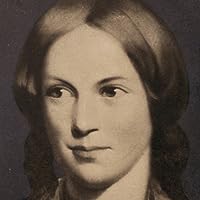
Author

Charlotte Brontë was an English novelist, the eldest out of the three famous Brontë sisters whose novels have become standards of English literature. See also Emily Brontë and Anne Brontë. Charlotte Brontë was born in Thornton, Yorkshire, England, the third of six children, to Patrick Brontë (formerly "Patrick Brunty"), an Irish Anglican clergyman, and his wife, Maria Branwell. In April 1820 the family moved a few miles to Haworth, a remote town on the Yorkshire moors, where Patrick had been appointed Perpetual Curate. This is where the Brontë children would spend most of their lives. Maria Branwell Brontë died from what was thought to be cancer on 15 September 1821, leaving five daughters and a son to the care of her spinster sister Elizabeth Branwell, who moved to Yorkshire to help the family. In August 1824 Charlotte, along with her sisters Emily, Maria, and Elizabeth, was sent to the Clergy Daughters' School at Cowan Bridge in Lancashire, a new school for the daughters of poor clergyman (which she would describe as Lowood School in Jane Eyre). The school was a horrific experience for the girls and conditions were appalling. They were regularly deprived of food, beaten by teachers and humiliated for the slightest error. The school was unheated and the pupils slept two to a bed for warmth. Seven pupils died in a typhus epidemic that swept the school and all four of the Brontë girls became very ill - Maria and Elizabeth dying of tuberculosis in 1825. Her experiences at the school deeply affected Brontë - her health never recovered and she immortalised the cruel and brutal treatment in her novel, Jane Eyre. Following the tragedy, their father withdrew his daughters from the school. At home in Haworth Parsonage, Charlotte and the other surviving children—Branwell, Emily, and Anne—continued their ad-hoc education. In 1826 her father returned home with a box of toy soldiers for Branwell. They would prove the catalyst for the sisters' extraordinary creative development as they immediately set to creating lives and characters for the soldiers, inventing a world for them which the siblings called 'Angria'. The siblings became addicted to writing, creating stories, poetry and plays. Brontë later said that the reason for this burst of creativity was that: 'We were wholly dependent on ourselves and each other, on books and study, for the enjoyments and occupations of life. The highest stimulus, as well as the liveliest pleasure we had known from childhood upwards, lay in attempts at literary composition.' After her father began to suffer from a lung disorder, Charlotte was again sent to school to complete her education at Roe Head school in Mirfield from 1831 to 1832, where she met her lifelong friends and correspondents, Ellen Nussey and Mary Taylor. During this period (1833), she wrote her novella The Green Dwarf under the name of Wellesley. The school was extremely small with only ten pupils meaning the top floor was completely unused and believed to be supposedly haunted by the ghost of a young lady dressed in silk. This story fascinated Brontë and inspired the figure of Mrs Rochester in Jane Eyre. Brontë left the school after a few years, however she swiftly returned in 1835 to take up a position as a teacher, and used her wages to pay for Emily and Anne to be taught at the school. Teaching did not appeal to Brontë and in 1838 she left Roe Head to become a governess to the Sidgewick family—partly from a sense of adventure and a desire to see the world, and partly from financial necessity. Charlotte became pregnant soon after her wedding, but her health declined rapidly and, according to biographer Elizabeth Gaskell, she was attacked by "sensations of perpetual nausea and ever-recurring faintness." She died, with her unborn child, on 31 March 1855.