



Margins
The Political Economy of Social Inequalities book cover
The Political Economy of Social Inequalities
Consequences for Health and Quality of Life
2000
First Published
3.00
Average Rating
530
Number of Pages

In the last two decades of the 20th century, we witnessed a dramatic growth in social inequalities within and among countries. This has had a most negative impact on the health and quality of life of large sectors of the populations in the developed and underdeveloped world. This volume analyzes the reasons for this increase in inequalities and its consequences for the well-being of populations. Scholars from a variety of disciplines and countries analyze the different dimensions of this topic. Part I of this volume reviews the historical evolution of the political context in which scientific studies on social inequalities have evolved. Part II examines the causes for the growing inequalities, questioning economic determinist explanations (such as attributing the growth to economic globalization) and technological determinist explanations (such as attributing the growth to the requirements of the New Economy). These chapters show, instead, how the growth of inequalities is rooted in power relations within and among countries and their reproduction through the state. The enormous economic and political power of the financial and entrepreneurial establishments and their related social classes is responsible for neoliberal public policies characterized by increased transfer of funds from labor to capital, further deregulation of labor markets, and declining redistribution through the welfare state. Part III then analyzes how the World Bank, IMF, WHO, and other international agencies are reproducing these neoliberal policies. Part IV addresses how privatization of the welfare state and resulting inequalities are negatively affecting the quality of life of populations. Part V presents one of today's major debates (the Wilkinson-Muntaner debate) in the scientific literature on the relationship between inequalities and health, contrasting different conceptions (one based on Weber, the other on Marx) of the pathways between inequalities and health. In Part VI, the contributors critically analyze some proposed solutions for reducing inequalities and provide alternative proposals rooted in the need to broaden the meaning of politics, democracy, and quality of life, and to intervene actively in political life on the side of those who question power relations within and among countries.
Avg Rating
3.00
Number of Ratings
2
5 STARS
0%
4 STARS
0%
3 STARS
100%
2 STARS
0%
1 STARS
0%
goodreads

Author

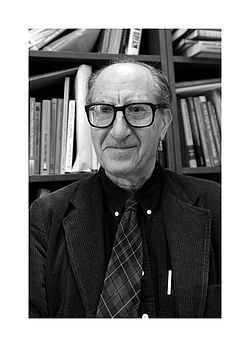
Vicenç Navarro
Vicenç Navarro
Author · 6 books

Vicenç Navarro ha sido Catedrático de Economía Aplicada en la Universidad de Barcelona. Actualmente es Catedrático de Ciencias Políticas y Sociales, Universidad Pompeu Fabra (Barcelona, España). Es también profesor de Políticas Públicas en The Johns Hopkins University (Baltimore, EEUU) donde ha impartido docencia durante 45 años. Dirige el Programa en Políticas Públicas y Sociales patrocinado conjuntamente por la Universidad Pompeu Fabra y The Johns Hopkins University. Dirige también el Observatorio Social de España. Tuvo que exiliarse de España por razones políticas. Ha vivido y trabajado en Suecia (Upsala), Gran Bretaña (London School of Economics, Oxford y Edimburgo) y en EEUU (The Johns Hopkins University) donde ha sido Catedrático de Políticas Públicas. Fue propuesto como Catedrático Extraordinario de Economía Aplicada por la Universidad Complutense de Madrid y se integró a la vida académica catalana como Catedrático de Economía Aplicada de la Universidad de Barcelona y más tarde como Catedrático de Ciencias Políticas de la Universidad Pompeu Fabra donde dirige el programa de Políticas Públicas y Sociales patrocinado junto con The Johns Hopkins University, en el que continúa siendo profesor. Ha asesorado a las Naciones Unidas, a la Organización Mundial de la Salud y a muchos gobiernos incluyendo: el gobierno de Unidad Popular de Chile, el gobierno cubano (en su reforma sanitaria), el gobierno socialdemócrata sueco, el gobierno socialista español, los gobiernos tripartitos y “d’entesa” catalanes, así como al gobierno federal de EEUU, habiendo sido miembro del grupo de trabajo sobre la reforma sanitaria la Casa Blanca dirigida por Hillary Clinton. Sus áreas de investigación son: Economia Política, Estado de Bienestar y Estudios Políticos. Ha publicado extensamente (24 libros traducidos a varios idiomas), siendo los más recientes el Subdesarrollo Social de España: Causas y Consecuencias. Anagrama; Hay alternativas. Propuestas para crear empleo y Bienestar Social en España. Ed. Seguitur. (con Juan Torres y Alberto Garzón), Los amos del mundo. Las armas del terrorismo financiero, con Juan Torres, y Neoliberalism, Globalization and Inequalities. Baywood. En 2002, recibió el premio de ensayo de la Editorial Anagrama por su libro Bienestar Insuficiente, Democracia Incompleta. De lo que no se habla en nuestro país. Según la Agencia de Información Científica Internacional de la Universidad de Pensilvania (Lauder Institute of Management and International Studies), el profesor Navarro es uno de los científicos españoles más citados en la literatura científica internacional en ciencias sociales (que incluye ciencias políticas, economía, sociología, y otras). En diciembre de 2009 fue nombrado Doctor Honoris Causa por la Universidad de Málaga, y en marzo de 2013 lo fue por la Universidad de Lleida. En el año 2014 recibió el Premio Stebbins, que se da al mejor profesor del Programa de Políticas Públicas de la Johns Hopkins University.

548 Market St PMB 65688, San Francisco California 94104-5401 USA
© 2026 Paratext Inc. All rights reserved