


This work has been selected by scholars as being culturally important, and is part of the knowledge base of civilization as we know it. This work was reproduced from the original artifact, and remains as true to the original work as possible. Therefore, you will see the original copyright references, library stamps (as most of these works have been housed in our most important libraries around the world), and other notations in the work. This work is in the public domain in the United States of America, and possibly other nations. Within the United States, you may freely copy and distribute this work, as no entity (individual or corporate) has a copyright on the body of the work. As a reproduction of a historical artifact, this work may contain missing or blurred pages, poor pictures, errant marks, etc. Scholars believe, and we concur, that this work is important enough to be preserved, reproduced, and made generally available to the public. We appreciate your support of the preservation process, and thank you for being an important part of keeping this knowledge alive and relevant.
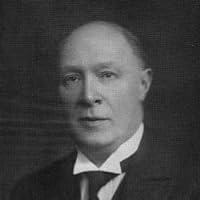
Author

James Lewis Thomas Chalmers Spence was a Scottish journalist, poet, author, folklorist and student of the occult. After graduating from Edinburgh University he pursued a career in journalism. He was an editor at The Scotsman 1899-1906, editor of The Edinburgh Magazine for a year, 1904–05, then an editor at The British Weekly, 1906-09. In this time his interest was sparked in the myth and folklore of Mexico and Central America, resulting in his popularisation of the Mayan Popul Vuh, the sacred book of the Quiché Mayas (1908). He compiled A Dictionary of Mythology (1910 and numerous additional volumes). Spence was an ardent Scottish nationalist, He was the founder of the Scottish National Movement which later merged to form the National Party of Scotland and which in turn merged to form the Scottish National Party. He unsuccessfully contested a parliamentary seat for Midlothian and Peebles Northern at a by-election in 1929. He also wrote poetry in English and Scots. His Collected Poems were published in 1953. He investigated Scottish folklore and wrote about Brythonic rites and traditions in Mysteries of Celtic Britain (1905). In this book, Spence theorized that the original Britons were descendants of a people that migrated from Northwest Africa and were probably related to the Berbers and the Basques. Spence's researches into the mythology and culture of the New World, together with his examination of the cultures of western Europe and north-west Africa, led him almost inevitably to the question of Atlantis. During the 1920s he published a series of books which sought to rescue the topic from the occultists who had more or less brought it into disrepute. These works, amongst which were The Problem of Atlantis (1924) and History of Atlantis (1927), continued the line of research inaugurated by Ignatius Donnelly and looked at the lost island as a Bronze Age civilization, that formed a cultural link with the New World, which he invoked through examples he found of striking parallels between the early civilizations of the Old and New Worlds. Spence's erudition and the width of his reading, his industry and imagination were all impressive; yet the conclusions he reached, avoiding peer-reviewed journals, have been almost universally rejected by mainstream scholarship. His popularisations met stiff criticism in professional journals, but his continued appeal among theory hobbyists is summed up by a reviewer of The Problem of Atlantis (1924) in The Geographical Journal: "Mr. Spence is an industrious writer, and, even if he fails to convince, has done service in marshalling the evidence and has produced an entertaining volume which is well worth reading." Nevertheless, he seems to have had some influence upon the ideas of controversial author Immanuel Velikovsky, and as his books have come into the public domain, they have been successfully reprinted and some have been scanned for the Internet. Spence's 1940 book Occult Causes of the Present War seems to have been the first book in the field of Nazi occultism. Over his long career, he published more than forty books, many of which remain in print to this day.