Margins




548 Market St PMB 65688, San Francisco California 94104-5401 USA
© 2026 Paratext Inc. All rights reserved
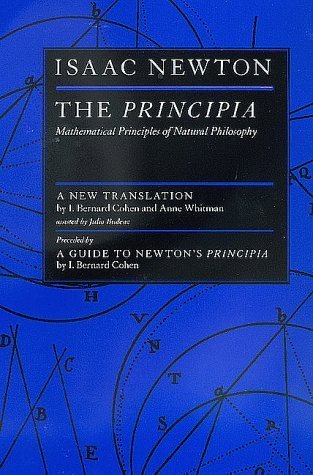
The book has an active table of contents for readers to access each chapter, PROPOSITION, PROBLEM, LAW, LEMMA, and SCHOLIUM of the following two books in an easy way: 1) THE MATHEMATICAL PRINCIPLES OF NATURAL PHILOSOPHY 2) LIFE OF SIR ISAAC NEWTON The key contribution of Newton to the modern science and engineering was the book THE MATHEMATICAL PRINCIPLES OF NATURAL PHILOSOPHY. THE MATHEMATICAL PRINCIPLES OF NATURAL PHILOSOPHY is also called Principia. Book I of the Principia details the foundations of the science of mechanics. Book II inaugurates the theory of fluids. Book III shows the law of gravitation at work in the universe. Newton also discovered measurable, mathematical patterns in the phenomenon of color through his book Opticks. He published it in 1704 and Opticks established Newton as a pioneer of the interweaving of pure theory with quantitative experimentation. In mathematics too, Newton made contributions to all branches of mathematics then studied and his solutions to the contemporary problems in analytical geometry of drawing tangents to curves (differentiation) and defining areas bounded by curves (integration). He discovered general methods of resolving problems of curvature, embraced in his "method of fluxions" and "inverse method of fluxions", respectively equivalent to Leibniz's later differential and integral calculus. Newton’s contribution to Enlightenment was also profound. His conception of the Universe based upon Natural and rationally understandable laws became one of the seeds for Enlightenment ideology. John Locke and François-Marie Arouet applied concepts of Natural Law to political systems advocating intrinsic rights; Adam Smith applied Natural conceptions of psychology and self-interest to economic systems. According to the very popular story, Newton figured out that the same force governed the motion of the Moon and the apple when he was on seeing an apple fall in his orchard in 1666. The story inspired millions of young minds around world to explore natural law of governing the Universe. Newton said: If I have seen further it is by standing on the shoulders of giants. This book is for those by standing on Newton’s shoulder to explore the world in any fields without fear.