Authors


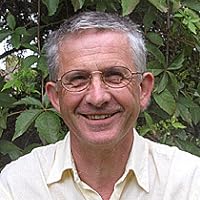
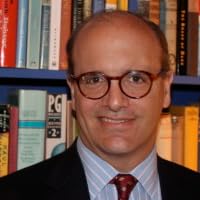
American academic. He is the James Clarke Chace Professor of Foreign Affairs and Humanities at Bard College and previously taught American foreign policy at Yale University. He is also the Editor-at-Large of The American Interest magazine and a Distinguished Scholar at the Hudson Institute. From 1997 to 2010, Mr. Mead was a fellow at the Council on Foreign Relations, serving as the Henry A. Kissinger Senior Fellow for U.S. Foreign Policy from 2003 until his departure. Mead writes regular essays at the website of the American Interest on a wide variety of subjects ranging from international affairs to religion, politics, culture, education and the media. Over the years he has contributed to a wide variety of leading American journals ranging from Mother Jones and GQ to the Wall Street Journal. He serves as a regular reviewer of books for Foreign Affairs and frequently appears on national and international radio and television programs. Mead is an honors graduate of Groton and Yale, where he received prizes for history, debate, and his translation of New Testament Greek. He has traveled widely in the Middle East, Asia, Europe, Africa, and Latin America, and often speaks at conferences in the United States and abroad. He is a founding board member of New America, and also serves on the board of Freedom House.

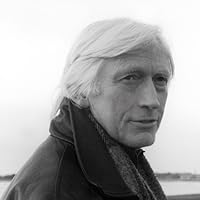
Richard James Overy is a British historian who has published extensively on the history of World War II and the Third Reich. Educated at Caius College, Cambridge and awarded a research fellowship at Churchill College, Professor Overy taught history at Cambridge from 1972 to 1979, as a fellow of Queens' College and from 1976 as a university assistant lecturer. In 1980 he moved to King's College London, where he became professor of modern history in 1994. He was appointed to a professorship at the University of Exeter in 2004. His work on World War II has been praised as "highly effective in the ruthless dispelling of myths" (A. J. P. Taylor), "original and important" (New York Review of Books) and "at the cutting edge" (Times Literary Supplement.)[


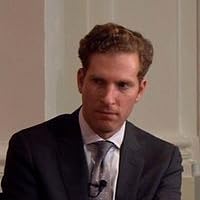
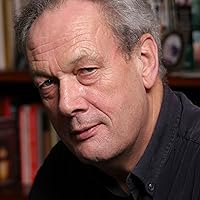
Noah Feldman is an American author and professor of law at Harvard Law School. Feldman grew up in Boston, Massachusetts, where he attended the Maimonides School. He graduated from Harvard College in 1992, ranked first in the College, and earned a Rhodes Scholarship to Oxford University, where he earned a D.Phil in Islamic Thought in 1994. Upon his return from Oxford, he received his J.D., in 1997, from Yale Law School, where he was the book review editor of the Yale Law Journal. He later served as a law clerk for Associate Justice David Souter on the U.S. Supreme Court. In 2001, he joined the faculty of New York University Law School (NYU), leaving for Harvard in 2007. In 2008, he was appointed the Bemis Professor of International Law. He worked as an advisor in the early days of the Coalition Provisional Authority in Iraq following the 2003 invasion of the country. He regularly contributes features and opinion pieces to The New York Times Magazine and is a senior adjunct fellow at the Council on Foreign Relations.


Lincoln Paine is the author of five books and more than fifty articles, reviews, and lectures on maritime history. His books include the award-winning The Sea and Civilization: A Maritime History of the World (Knopf, 2013), Down East: A Maritime History of Maine (Tilbury House, 2000), and Ships of the World: An Historical Encyclopedia (Houghton Mifflin, 1997). From 2009 to 2012, Lincoln was the guest curator and archivist of the Norman H. Morse Collection of Ocean Liner Materials at the Osher Map Library, University of Southern Maine in Portland, Maine, and since 2006 he has been an editor of Itinerario: International Journal on the History of European Expansion and Global Interaction, published at Leiden University, The Netherlands, in conjunction with Cambridge University Press. He serves on the board of the Maine Maritime Museum in Bath (one of the ten best maritime museums in the world, according to marineinsight.com). He and his wife live in Portland. Their daughters happen to be named for ships.