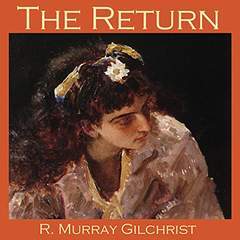



Robert Murray Gilchrist (1867-1917) was an English novelist and author of short stories often set in the Peak District. He is best known today for his Gothic short horror stories, which earn him a deserved position alongside the likes of Stevenson, Stoker, Wilde, and Stenbock. "The Return" is an eerie ghost story about a man who returns to his home village after 20 years in the diamond fields of South Africa to see whether his sweetheart has waited for him.... When he returns, he finds that much has changed during his absence. But where is his beloved Rose Pascal?
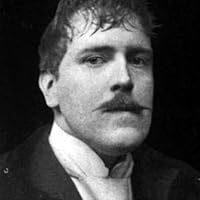
Author

Robert Murray Gilchrist was born in Sheffield, England in 1867. He never married and throughout his life lived mostly in remote places, including the North Derbyshire village of Holmesfield and a remote part of the Peak District. He began his writing career in 1890 with a novel, Passion the Plaything, and would go on to publish a total of 22 novels, six story collections, four regional interest books, and a play. His stories appeared in many popular periodicals of that era, including The Temple Bar and the decadent journal The Yellow Book. Not much is known about Gilchrist’s personal life, but he is known to have lived for a time with a male companion, and given that Gilchrist never married and sometimes featured homoerotic themes in his work, as in the story ‘My Friend’, it is possible he was homosexual. Though well known today to connoisseurs of weird and Decadent fiction, Gilchrist’s story collection The Stone Dragon and Other Tragic Romances was generally poorly received by critics on its initial appearance in 1894, and following the book’s failure, Gilchrist chose to write in other genres. It was not until Hugh Lamb began anthologizing some of Gilchrist’s work in the 1970s that he began to be rediscovered. Now he is ranked by many alongside other fin de siècle practitioners of weird fiction, including Vernon Lee, Arthur Machen, and Eric Stenbock and The Stone Dragon is a volume highly sought-after by collectors. During World War I, Gilchrist was noted for his charitable assistance to Belgian refugees, many of whom attended his funeral after his death in 1917. -Valancourt Books