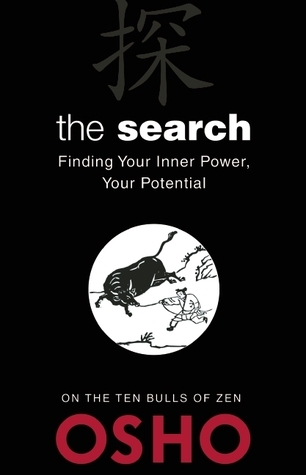
Human beings have an inbuilt drive or urge to search for the inner power that is needed to reach our true potential. This search is the search for the origins and meaning of life itself. We are here, we have life – but we don’t know what life really is. We can feel our energy, but don’t know where this energy comes from and to what goal this energy is going. We are that energy, we have glimpses of its true source and our connection to it, and those glimpses keep us going even when it seems we will never find what we are seeking – but still we do not know what that energy is. An ancient Zen story symbolizes the search for the source of this life. Zen master Kakuan’s story of The Ten Bulls of Zen is a teaching that uses ten images, each representing a particular step on the journey of experiencing and understanding it means to be a conscious and aware human being. Osho takes us through this story and its lessons for the traveler on a journey into the inner world – that’s what meditation is all about according to him. But reaching the pure, uncluttered freedom of meditation is not the end. The circle is only complete when the seeker comes back into the marketplace of the world, but as a transformed person. This is a book that belongs in the hands of everyone who is on the search, beginning the search, or just thinking about the search. The book is illustrated with ten original images of Gomizen’s Ten Bulls of Zen from the Fuzoku Tenri Library, Tenri University, Japan.
Author

Rajneesh (born Chandra Mohan Jain, 11 December 1931 – 19 January 1990) and latter rebranded as Osho was leader of the Rajneesh movement. During his lifetime he was viewed as a controversial new religious movement leader and mystic. In the 1960s he traveled throughout India as a public speaker and was a vocal critic of socialism, Mahatma Gandhi, and Hindu religious orthodoxy. Rajneesh emphasized the importance of meditation, mindfulness, love, celebration, courage, creativity and humor—qualities that he viewed as being suppressed by adherence to static belief systems, religious tradition and socialization. In advocating a more open attitude to human sexuality he caused controversy in India during the late 1960s and became known as "the sex guru". In 1970, Rajneesh spent time in Mumbai initiating followers known as "neo-sannyasins". During this period he expanded his spiritual teachings and commented extensively in discourses on the writings of religious traditions, mystics, and philosophers from around the world. In 1974 Rajneesh relocated to Pune, where an ashram was established and a variety of therapies, incorporating methods first developed by the Human Potential Movement, were offered to a growing Western following. By the late 1970s, the tension between the ruling Janata Party government of Morarji Desai and the movement led to a curbing of the ashram's development and a back taxes claim estimated at $5 million. In 1981, the Rajneesh movement's efforts refocused on activities in the United States and Rajneesh relocated to a facility known as Rajneeshpuram in Wasco County, Oregon. Almost immediately the movement ran into conflict with county residents and the state government, and a succession of legal battles concerning the ashram's construction and continued development curtailed its success. In 1985, in the wake of a series of serious crimes by his followers, including a mass food poisoning attack with Salmonella bacteria and an aborted assassination plot to murder U.S. Attorney Charles H. Turner, Rajneesh alleged that his personal secretary Ma Anand Sheela and her close supporters had been responsible. He was later deported from the United States in accordance with an Alford plea bargain.[ After his deportation, 21 countries denied him entry. He ultimately returned to India and a revived Pune ashram, where he died in 1990. Rajneesh's ashram, now known as OSHO International Meditation Resort and all associated intellectual property, is managed by the Zurich registered Osho International Foundation (formerly Rajneesh International Foundation). Rajneesh's teachings have had a notable impact on Western New Age thought, and their popularity has increased markedly since his death.